04 June, 2019

a tale of five composts

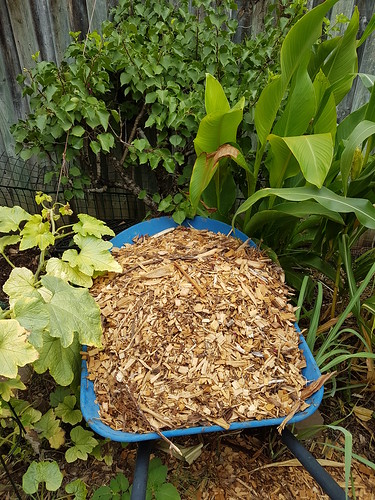
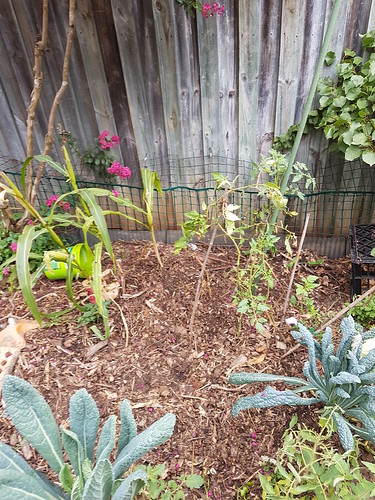
Turns out that under the woodchips was a lot of leaf mulch which is biodegrading pretty damn fast.

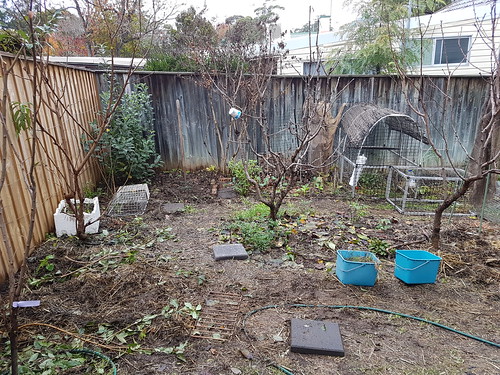
Compost 1 (backyard, apricot-avo bed) seems rather hot - it's got a big mix of stuff: lettuce leaves, autumn leaves, chook poop, coffee grounds, woodchips. It's pretty much steaming. I'm debating whether I turn it or leave it to just collapse over time.

Compost 2 (front yard, next to driveway) is pretty hot - this is mostly chip/leafmulch and used coffee grounds.

Compost 3 (front chookyard, in small black bin) isn't heating up at all - I don't think that the bin is big enough to hold the heat together. It's been well urine-watered, though.

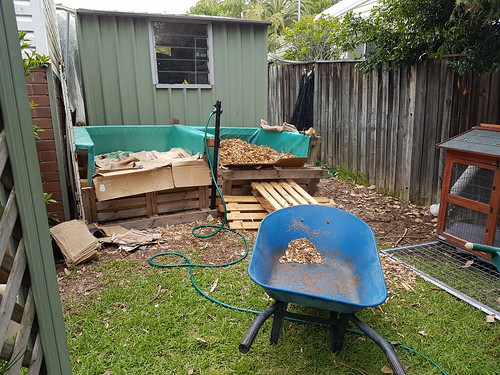
Compost Bay 1 (behind shed, close to wall) is settling down, I think. It got made about 3 weeks ago and I covered it up and haven't really looked at it. I think it's just active, but not really burning hot.

Compost Bay 2 (behind shed) is pretty hot beneath the surface. That's a mix of grass clippings, woodchips, and I think some green wastes. It only got filled up with woodmulch on Monday, and that's pretty hot.

still to do

fence windrow
- use mattock to dig out a trench about 1m away from the fence (basically break the grass line)
- line space between fence and trench with wet newspaper, then woodchips on top as high as it will go (use cardboard to keep from tumbling onto lawn?)
- add manures/green wastes
- cover with woodchips

banana circle
- use mattock to dig out a circle for the bananas, heap up the soil in a semicircle, with an open U facing upwards
- need to decide location: south of path, or in the middle of the yard?
- also to plant: paw paw, ginger, galangal, turmeric, qld arrowroot, mango (?), comfrey, lemongrass

backyard tree mulches
- need to consider what has priority: banana circle or backyard mulches?

02 June, 2019

Activism in my backyard

So, after the federal election on the weekend, the environmental world is looking a lot more bleak.

Very little can be done about government policy destroying the world - it seems we're in for a close one. And if a close one fails, then I'm looking at survival for me and my community. Which means building that community.

What I can do apart from appealing to my LNP member of Parliament is keep growing my garden. This week I'm planning one metre plots over the winter. I'll probably be planting them in the next week too. I'm using one magic Square grow your own food on one square metre by Lolo who Bane who be in South Australia, so it's written by an Australian for Australian gardens. And I have all the seeds necessary for the coming season. I just need to work out where I'm growing everything.

eta: two weeks later
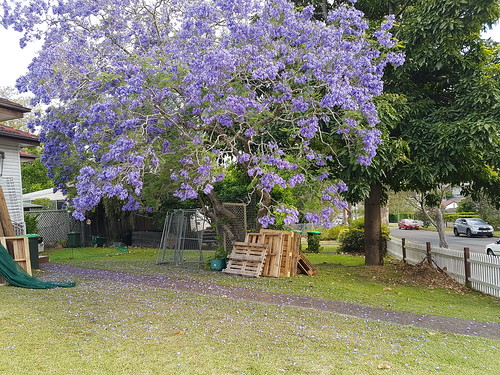
I just received a 4 m cubed pile of woodchips on the front lawn. The guy said it was 'leafmulch' but it's actually 'chipmulch' with very little leaves. Someone's already come by and taken a bite of it, I can see the furrows where they've scraped it up.

So, the next problem is what to do with 4 cubic m of woodchips, and I am reading up like crazy. There's only so many compost piles you can make with woodchips, which aren't apparently a particularly good bacterial compost anyway - they work better fungally, because fungi do a better job of breaking down high-lignin/high-tannin materials.

There's a whole thread on this at Permies.com, and additionally a movie of nearly 2 hours Back To Eden, which should be interesting because I think that it was made and produced by Christians.

Also very much worth looking into: the work of a guy by the name of Jean Pain who not only made woodchip heaps, but also heated water in them and all kinds of other things! And now I'm trying to work out where I could build this large a compost heap, with which to take showers in! (Actually, more effective for us in the moment would probably be heating the house in winter by running an air pipe through the heap to gain heat, then sending the output into a high vent in the house which would then heat the room, sinking to the floor as it cooled and pulling more warm air into the place. It's certainly a thought!

One place where I should definitely heap up those leaves and woodchips is the passionfruit bed. At least a couple of wheelbarrows - maybe a few more. So long as the chooks don't get out, we should be okay. A pity I can't run the water from the laundry out to it. I mean, we probably could, but I don't have the piping just yet...

I've planted out the Plum-Stone bed at ground level, and the Apple-Crepe bed using a metal frame half-filled with half-mulched woodchips from last time, and half-filled with free soil collected from the artwork Absorption by Asad Raza.

This week, I'll be planting out the front vegie bed

Things To Do During The upcoming Permabee

Food Forest along front fence

Citrus, Macadamias, Avocados, and others.

Banana circle

May need to make one of the composts in the middle of this.

Laundry greywater?

Need to talk with the sister about this; whether she's willing to have the option of using more natural products for washing things, and then passing the water out to the garden.

24 January, 2019

in the height of summer

Quick bed-check.

Avo-Shed: chook tractor (since at least November)
Garden January 2019

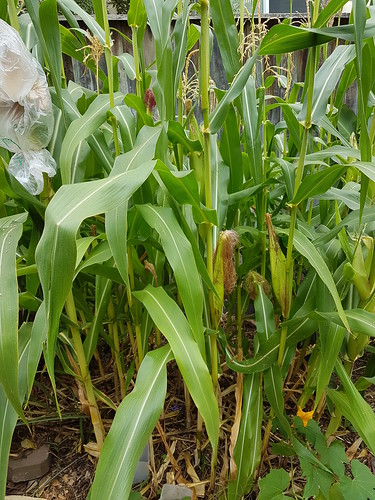
Apricot-Avo: corn is tall and full of ears, could probably do with some extra watering/mulching.
Garden January 2019

Apricot fore: potatoes (need digging out), Queensland arrowroot (also may need harvesting), random curcubit that doesn't look like anything we know.
Garden January 2019

Crepe-Apricot: Popping corn (not very good), tomatoes, kale (left over from winter), some comfrey and parsley as edging. I seeded a summer mulch there yesterday, and planted some 'homegrown pumpkin' seedlings, but one Hainan chicken got out and probably dustbathed there and killed them.
Garden January 2019

Apple-Crepe: tomatoes, beans, a couple of pumpkins/curcubits,
Garden January 2019

Stone-Apple: tomatoes, 'good bug mix', sunflower.
Garden January 2019

Stone fore: Wintermelon seedlings, zucchini seedlings. I trimmed down the stone fruit tree pretty severely - it went up and up and up and the only harvest I really got were the plums, so I'm cutting it back.
Garden January 2019

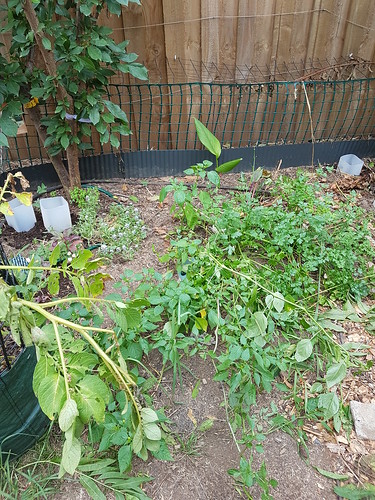
Plum-Stone: ginger up the back, parsley, a single beetroot, some tomatillos that are just about to fruit, only I want to put the chook dome over it for the next two months...
Garden January 2019

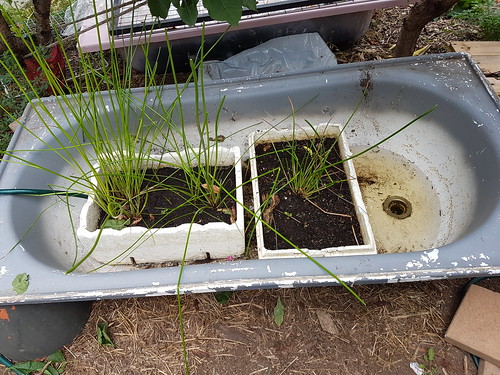
Upper Cherry-Peach: bathtub water garden - need to check for a hole in the plug area. It's leaking.
Garden January 2019

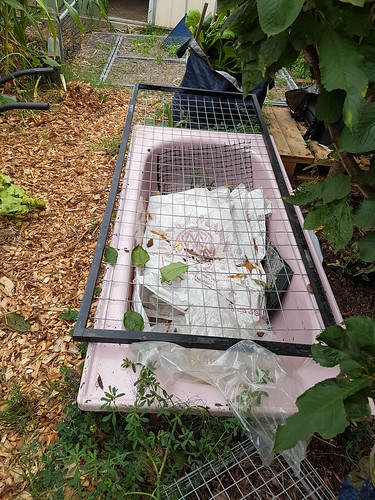
Lower Cherry-Peach: bathtub garden - nothing in here yet, but I'm thinking I might plant the garlic in here if I can get enough good soil. (Good soil is tough to find in decent quantities; at least until the compost bioreactors finish getting their acts together...
Garden January 2019

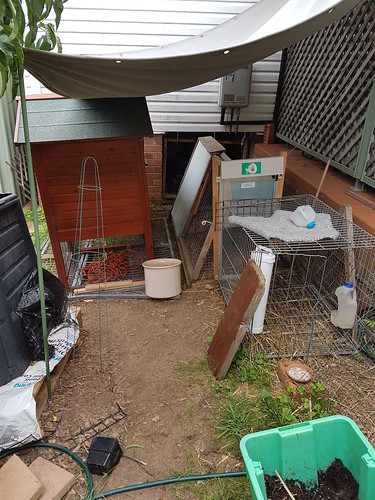
Chook house: Due to be moved sometime this weekend (I hope; maybe.)
Garden January 2019

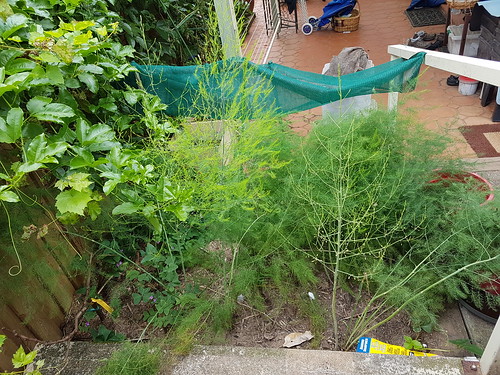
Asparagus bed: (upper step bed)
Garden January 2019

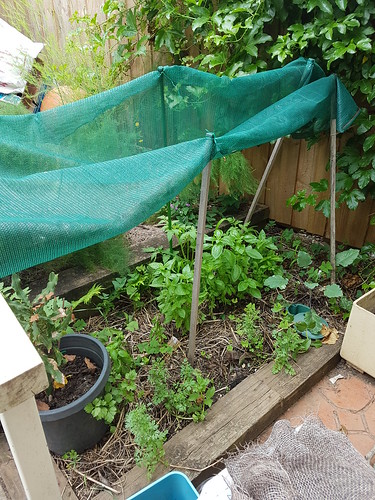
Annual herb bed: (lower step bed)
Garden January 2019

Vegepod:
Front row:eggplants, capsicum (peppers)
Middle row:tomatoes
Back row:melons, cucumbers, possibly a pumpkin or two? They're growing up the vines with the plan to provide shade (this aspect of the house faces north, which is the sunny side here in the southern hemisphere, so the shade would have been good a month earlier, but the bed was only created in December).
Garden January 2019

Front garden/orchard: various plants which aren't doing so well - probably the soil isn't rich enough or deep enough for them. I'd need to run the chooks through here rather longer than I did, I think.
Garden January 2019

05 December, 2018

the permabee post

So Sunday came and was crazy hot - 35C with strong winds in the afternoon.

But we got SO MUCH done!

1. Permanent chook run

Ironically, while this was something I particularly wanted completed, it didn't get finished. It didn't even get started, due to the one thing which I'd casually earmarked as 'necessary but not an actual task' turning out to be seriously labour and time-intensive!

I'll talk about this at the end of the list.

2. connect up rainwater tanks

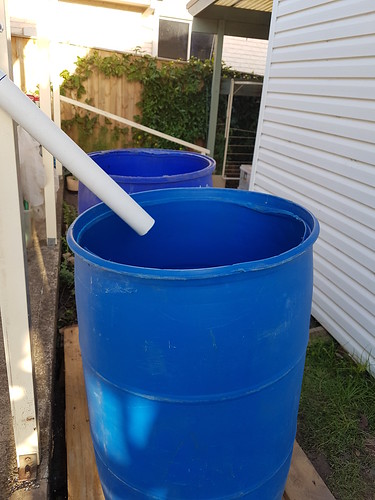
This was beautifully done! Two linked 60L barrels set on a platform with a tap installed so the water can be bucketed elsewhere, or channelled down a hose to the orchard!
Permabee 2018

3. make composting bioreactor

At first the bioreactor was difficult because nobody had seen it done before. However, after I got my laptop out and showed the taskgroup the video of the Johnson-Su bioreactor, they got the gist of it, and things proceeded pretty well.

A compost bioreactor is essentially a 'set and forget' compost that's supposed to be very rich in fungal nutrients because it doesn't get turned to aerate, thereby requiring the biota to readjust when everything is turned over. Instead of turning, six 'air columns' run through the middle of the pile, allowing the bacterial to breathe and do their thing. It takes a while to break down (some 5-6 months was the estimate) but the results are excellent, and not having to turn it means you can create several of these around the yard and deplete one while others do their thing.

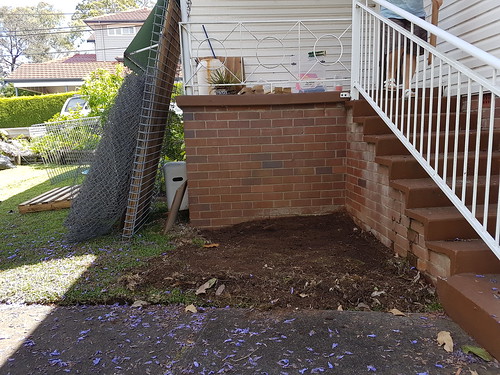
Bare space where the bioreactor is going:
Permabee 2018

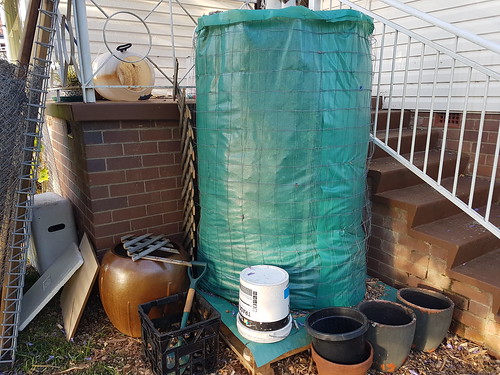
They put down a wooden pallet on bricks (to keep it from rotting) and then positioned the bioreactor on top.

Completed but lidless bioreactor on the day:
Permabee 2018

The bioreactor contents were basically two garbage bags of horsemanure, two containers of guineapig litter, one container of chook litter, and a helluvalot of chip mulch.

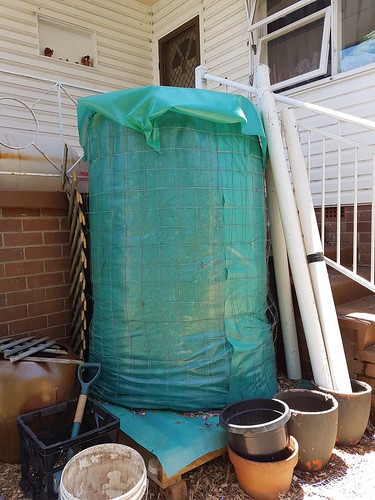
A day later, with the pipes pulled out to leave the airholes, and a 'lid' on top to keep the moisture in.
Garden December

Two days later, with a water barrel that gets filled with the 'waste shower water' that fills up a bucket while showering, and which seeps into the compost to keep it moist:
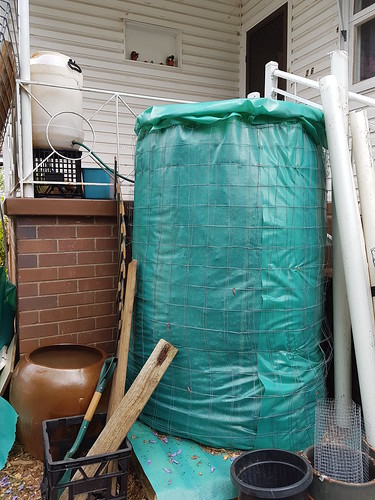
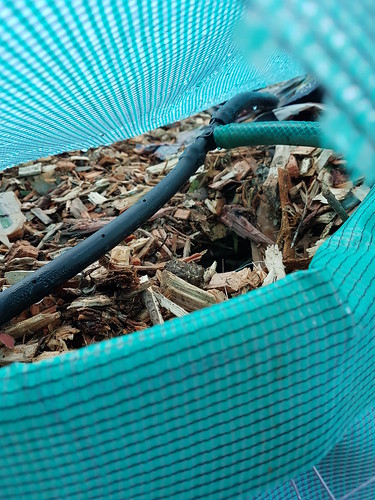
Bioreactor
Bioreactor

This one, more than the other projects, will probably have pictures in future, so others can see what it looks like as it breaks down over time.

4. (move lattice and) set up composting bays

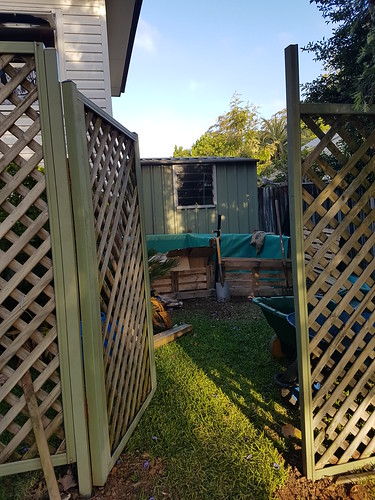
The front and back yards of the house were previously defined by the position of a lattice that ran in line with parts of the house. It left a gap behind the shed of about 1.2m, enough for a composting space, but not a very easy place to work. I wanted the lattice moved forward to run in line with another corner of the house, and a couple of compost bays set up behind the shed.

Late on Sunday afternoon:
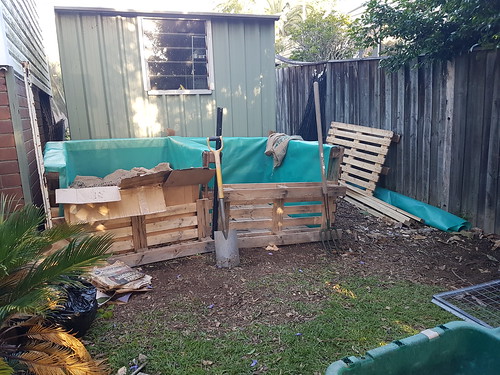
Permabee 2018

This afternoon (Wednesday):

Composting Bays

The idea of the composting bays is to have something that regularly gets added to. Paper wastes, vegetable wastes unsuitable for the worms or chooks, possibly chook manures. It will require turning after a while, but right now, it's just settling with the compost that was made on Sunday (left-hand bay) and the pine-and-banksia woodchip mulch that I've been filling the right-hand bay with for the last couple of days. We'll see about the results - ideally, there should be more 'green'/nitrogenous wastes to make a hot compost, but the chips are only about 4 days old and might still have some decomposing to do. Either way, neither of these composts is likely to be much use for a few months at least.

5. empty, move, and refill vegepod

This took somewhat longer than I expected; I was just expecting a move-to-a-new-location, but the wonderful women working on this task went about not only repositioning my vegepod and making sure it was flat and supported and positioned to my satisfaction, but also turned it into a wicking bed. Which I kind of wanted, but didn't figure I had the time/materials to do.

Well, they found the time and scrounged the materials, and although this meant that the task took longer than expected, it's a wonderful surprise and will be extremely useful!
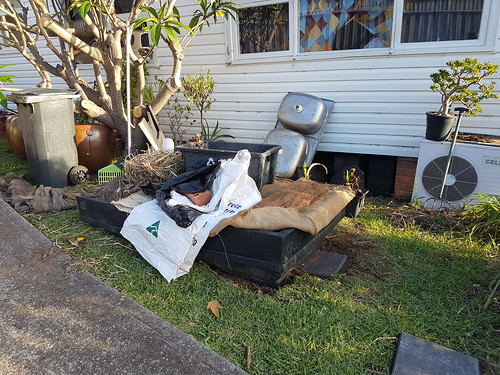
Permabee 2018

Next week, I'll plant out the melons, cucumbers, tomatoes, eggplants, and mild/sweet peppers that I've been growing for the last month, and set up some wires to run up to the roofline. The goal is to get the vines growing up those wires to give a little shade to the house in the coming months of hot northerly sun...

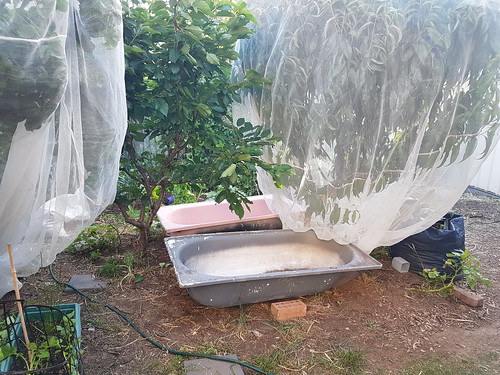
6. set up bathtub gardens

We moved the bathtubs, and that was about it. I needed to seal up the holes in the tubs, and I haven't. But they're in the location I've envisioned, now I just have to get them sealed and re-positioned, and then we can add what goes in them. One water garden, one above-ground garden - possibly a wicking bed.
Permabee 2018

Unexpected

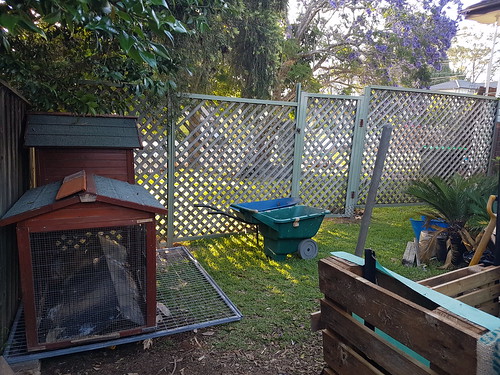
Team Chook Pen had the task of not only creating a run for the chooks, but moving two lattices (one of them blocking the area for the compost bay) and combining them into a single fence.

I put this down as a throwaway line - in brackets - a task that needed to be done in order to get around to the chook pen.

It took ALL DAY.

Out of all the tasks, this was the most time-intensive one! Taking the lattices apart, digging out the fenceposts, digging the new post holes, putting it all back together... A team of five or six started when the bee began, around 10am, and it was pretty much the very last thing to be completed around 4:30pm.

WOW!

But the result is also WOW!
Permabee 2018
Permabee 2018

Overall, that is easily several months (if not several years) worth of work done in a single day by dedicated teams of people who love gardening. The old adage "many hands make light work" precisely sums it up!

The non-existent chook pen is a bit of a pain, but I have a reasonable idea of how to go about it now, I just have to kick myself into actual gear in the next couple of weeks...

I'm thinking about applying for a permabee next year, too - this one to simply plant out a food forest along the picket fence line...

28 November, 2018

Permabee

Got a permabee happening at my place on sunday - a Permaculture working bee - with my local permies group, and while I'm looking forward to it, I'm also a little worried that I won't have enough to keep everyone occupied for the entire day.
Garden Nov 2018

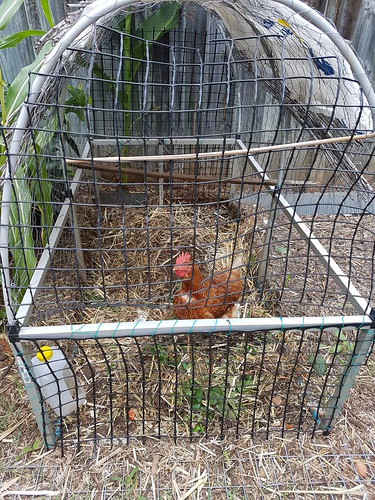
1. Permanent chook run
- using metal fencing in picture
- this is somewhere for the chooks to go that isn't the backyard while I'm growing things out the back in the middle of summer. I can move the chooks around the backyard in winter, but I want the space for growing things in summer
- need to work out the plan of which piece is going where and how to make it all fit together (or I could ask people to do it?)

2. connect up rainwater tanks - the main 4000L rainwater tank hasn't arrived, but we have a couple of 60L barrels that could be set up next to the carport and connected up to the downpipe there.

3. make composting bioreactor
- full resource guide
- this is an experiment in seeing if this kind of composting system could work: just set and forget until it's needed six months later (and I always need soil in my garden)
- this will be the most labour intensive one to do

4. (move lattice and) set up composting bays
- one video here
- another one here
- still another one here

5. empty, move, and refill vegepod
- can do this myself but will be easier with multiple people

6. set up bathtub gardens
- can do this myself also

On re-reading this post, I suspect I've underestimated just how long it's going to take to do some of these things. We'll be lucky to get the chook pen, the bioreactor, and the compost bays done in a day, I think!

spring into summer

It's six of one, half a dozen of the other, really.

When my garden isn't growing, then I feel I have no worthwhile photos to take. When my garden is growing, then I'm too busy in it to post here!

So the 'over-wintering' turned out to be a pretty good thing, because once spring properly came in with a burst of two weeks of rain in early October, everything has been growing and it hasn't stopped.

From this at the end of August:

Garden winter 2018

To this in the middle of October:

Garden winter to spring

To this at the end of November:

Garden winter to spring

There's a LOT of things growing in the backyard right now.

It helps that I've started to work out a system that suits me and the space in the garden, and that I've had all of October and November off work. Chances are that's going to continue into the new year, and it's going to be a little rough with nobody earning a full wage in the house. Still, we'll manage somehow. I think the garden produce is going to matter quite a bit this year.

The biggest change this year has been the fruit harvest. As in BIGGEST.

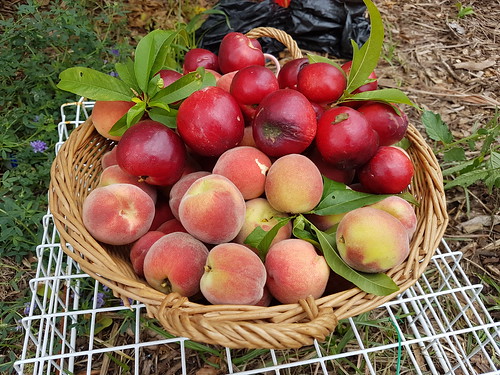
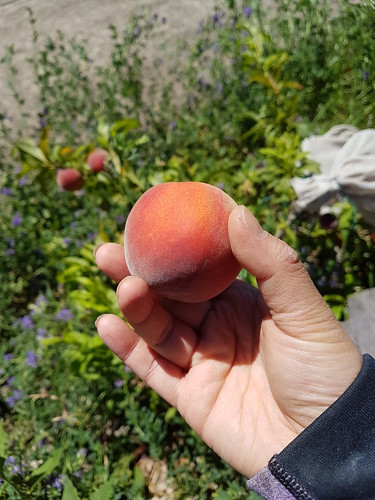
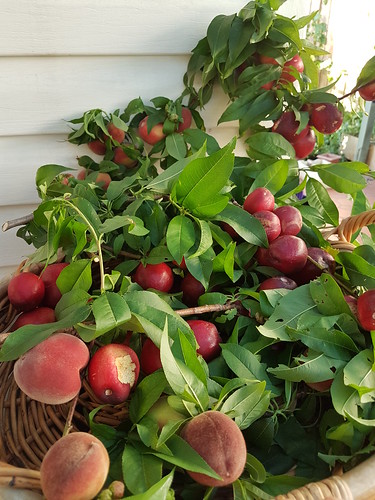
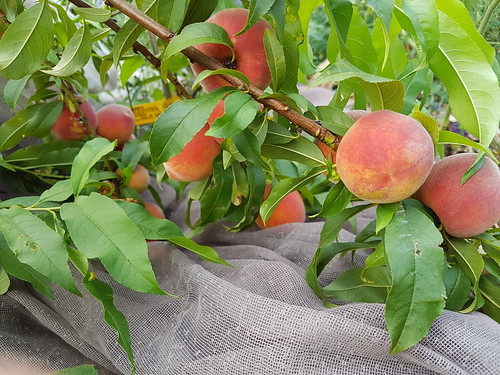
The nectarines and peaches went beserk.

Garden winter to spring

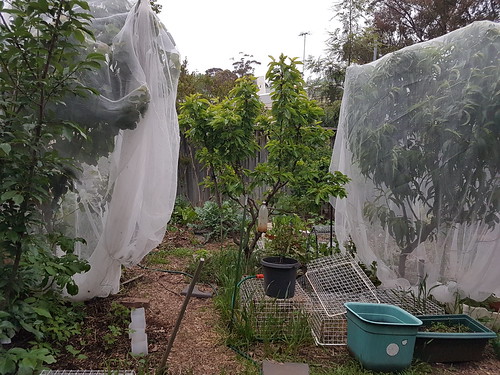
The two weeks it rained - right as the fruit was growing on the tree - probably helped, as did the chickens spending a fair chunk of the winter digging around their roots and turning over the compost that I made in the orchard bed.

Garden winter to spring

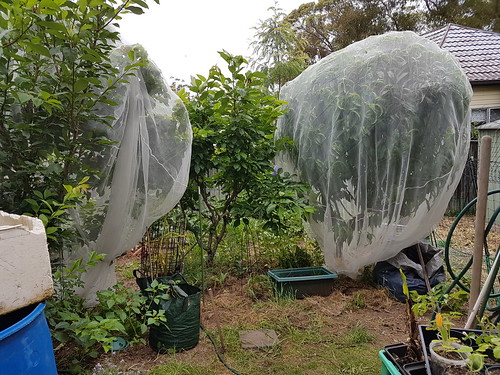
The branches got so heavy and large, that when I adjusted the fruit fly net in mid-October, I had to heavily prune some of the fruit-bearing branches to give the rest a fighting chance.

Garden winter to spring

I picked the last of the peaches yesterday and we are now drying them like there's no tomorrow. They'll go in air tight containers with little moisture-absorbent packets for eating next year (if they don't go mouldy). I'll make at least one jar of jam tomorrow, again for eating next winter.

Garden Nov 2018

It's nice to have productive garden - but yes, a lot of effort in processing and dealing with the excess. On the list of things to learn about next year: pressure canning.

14 September, 2018

bees, natural beekeeping, convenience, and humanocentricism

Read assorted articles about The Flow Hive, mostly out of curiosity. And, more recently, Australian Story, which did a segment on the guys who came up with the Flow Hive. If I may borrow something from the world of body health, the Flow Hive vs. the Langstroth Hive (traditional beekeeping) is the difference between getting gastric surgery for health reason, and just living with your bodily situation.

I mean, Gastric band surgery to adjust eating habits and improve is better than just going on as you've done, but it's not as ideal as, say, losing that weight slowly, over a matter of weeks, months, years. Surgery may be a solution, but it doesn't have to change your lifestyle, and it's best for your body if you can eat healthy and live healthy, lose that weight gradually.

In part, this is because of the difference in mindset; there's a problem - but the problem isn't obesity. Obesity is the symptom. The problem is a raft of other factors that cause obesity: factors that include environment, social and financial limitations, and genetics.

The flow hive is gastric surgery - better than a langstroth hive. But it doesn't necessarily change the mindset of that kind of beekeeping, which is people-centric. The primary consideration is the convenience of the honey harvest, not the way that bees work and humans working with bees to encourage them and - secondarily - to get a bit of honey out of it.

That's the issue that's being argued about the flow hive; that it doesn't really make life better for the bees - we're just making it easier for people. Which, yes, is fair enough if you're keeping bees for honey; although not so much of a good thing if you're subscribing to, say, permaculture or growth abundance principles, where humans maximise output by working with nature, rather than forcing nature to do things in a way that's just simpler on humans, as both Langstroth and Flow hives do.

There are also native bees and their hives, which are a different thing entirely from the European bees...

It's a thought.