Showing posts with label composting. Show all posts

28 July, 2022

dear diary: Monday 25th July

OBSERVATIONS

Bulb section of yard is sprouting.

CHOOKS

Coldie and Shantung went to the vet. Coldie is fine, all healthy, seems okay after her surgery and implant.

Shantung...they extracted about 600mL of fluid from her abdomen. There was definitely something happening there; exactly what, the vet still isn't sure. Apparently Shan still feels a bit 'lumpy' inside and so she's going back after her course of anti-inflammatories and painkillers is done. (which I forgot to give her tonight. DAMN.)

She was slow out the gate this morning, retreated into the laying box and stood there for a while. But by late morning she was out with the others, happily pecking away at the prawn heads. And she was roosting tonight, so that's good. But I'll have to medicate her in the morning again. UGH. I hate medicating chooks.

Shan extraction
The fluid they extracted from her!

PRUNING & PREPARING

trimming down a lot of the trees, ready for Friday afternoon and the chipper...

NOTES

I feel like I don't have enough things for the composting on Saturday. I was planning to chip all my branches, but not going to manage that before the weekend.

1 barrowload of mown grass (2 days old)
1 chookyard of half-mulched compost
3 boxes of half-decomposed chips
3 boxes of fresh-mulched chips
1 box of paper shreddings
3 tubs of chicken poop
1 garden bed of indian borage
1 bucket of wood ash
1 packet of rock dust

24 July, 2022

dear diary

WEATHER

Actually sunshine! After a week of rain and rain and more rain, and everything going squelchy and squishy and ugh... So damn tired of the rain at this point.

CHOOKS

Chooks seem healthy. Bub-bubs (Goong) isn't going through the tunnels to roost at night. She's been finding alternative places to roost, and I'm not sure why. Tonight I found her refusing to go along the south-side tunnel, and in the end I had to carry her out and put her to bed.

Both Goong and Siyao are laying, with Shan occasionally producing an egg. Coldie and Hainan are just swanning around eating food and being layabouts. *sigh* But I don't have the discipline to kill them just because they stop laying. It's a problem.

Garden February

PRUNING & PREPARING

I trimmed down several of the trees in the backyard. Going to plant some FENUGREEK in the CREPE-APRICOT as a green mulch (maybe radish, maybe mustard, too).

PLANTING

FENUGREEK.

RIPENING

ORANGES (still!)

HARVEST

ORANGES?

NOTES

Have the composting workshop this weekend.
1. worm farming
2. Composting + collecting bits and pieces for composting
3. Sheet composting using chooks
4. Black bin composting + pest management
5. making a compost
6. Weed teas

Need to:
set down woodchips across the paths
chip all the tree branches that have gathered up over the last few months
collect more leaf litter
collect more kitchen wastes
tear up newspapers/cardboard for composting
clear out the chook coop underside for nitrogen mass
pull apart the HEXABED

03 November, 2021

permabee: chook enclosure

Permabee October 2021

Had a permabee on the weekend to enclose the 2nd chook yard, partly to give some protection against bush turkeys and swooping birds.

Permabee October 2021 Permabee October 2021

Not only got the enclosure (roof) completed, but also trimmed the overhanging branches, shredded the branches, raked up the leaves, dug out the mugwort tree, dragged over the fig tree for replanting, sieved the existing compost, and made a new compost!

Permabee October 2021 Permabee October 2021

I love permabees; opportunity to meet, chat, get to know people, work in concert with others, learn, and get shit done!

Permabee October 2021

Now need to find some other members who'd like to get shit done at their place...

27 September, 2021

composting

The state of the empty composting bay last week:
Garden

That's the contents of one neighbour's green bin.

I've been trying to get my neighbours to give me their grass clippings as soon as they're clipped. I can toss them in the chook pen, or make them into compost: the sooner the better, because it'll still be 'green'. It's been difficult training them to do so: they're so used to putting it in the bin and forgetting about it that they don't remember that there's any other way to do it.

Garden

Anyway, I've been collecting mulch all week from a local mulch pile, (like, 5 minutes drive) and made two trips on Tuesday morning, another on Wednesday morning, another on Friday morning, and one this morning. Between those trips, and assorted lawn clippings from the neighbours, I collected enough mulch to fill up a compost bay and cover most of my paths.

Garden

And with the addition of some seaweed brew and banana skin brew, some potash (wood ash), and fresh urine, the compost was off to a hot start!

Garden

Could probably do with another trip or two to get another compost happening, woodchips composts start fast but then slow down a lot, particularly if you don't add sufficient nitrogen sources to it. If I could get another batch or three of lawn clippings over the next fortnight, I'd wet the chips on top, hoik the lawn clippings over, and let it all compost down. The chips are slowest to decompose, so they're better under the lawn clippings, which decompose in a matter of weeks rather than years.

30 October, 2019

the Johnson-Su compost bioreactor

Iteration One - February 2019

The first iteration of the Johnson-Su compost bioreactor was made in December 2018, during a permabee at my house

Bioreactor

There were a few variations in the way we built this:

1. The wire was thinner than it was in the video - maybe 4-gauge, while the video wire was about 6-gauge or something?

2. The plastic was green and translucent rather than black, which may have made a difference to the bio-organisms that are supposed to be occupying the compost: they may not like the light, so the outside may end up not quite as well-processed as the inside.

3. The woodchips were actual woodchips, minimum 2.5cm (1 inch) and many were rather larger.

Otherwise we built the compost bioreactor according to the specifications in this video and left it be.

I don't think there was quite enough nitrogen materials for the bioreactor, because it didn't heat up at all. I had to add coffee and horseshit to the top of it and it's not really soaked all the way through. Next time, I'll spend a couple of weeks building up the nitrogenous materials: coffee, lawn clippings, horseshit, vege refuse from the local greengrocer...

Anyway, the compost didn't hot-decompose at the start, but so far as I can tell from turning it over, it's still decomposing fairly well with a regular application of runoff wash water (sometimes mixed with human urine). It's only been 3 months, though, so it's difficult to be sure - I think you're supposed to leave it for 5-6 months at least.


Iteration Two - July 2019

I'm writing this in October 2019, 2 months ago after I had another permabee, during which we took apart the Johnson-Su bioreactor.

Permabee 2019

There was some decomposed material, but not the entirety of the bioreactor as expected from the video. The compost was filled with undecomposed woodchips. This was disappointing to say the least.

So we sifted some of the composted matter out and rebuilt the bioreactor, chipping up the larger pieces of wood and branch the better to decompose.

It seems to be decomposing a little faster than last time; it's been two months and it has a fairly significant slump to it, which suggests it's processing. The 'lid' has blown off - we've had some strong winds in late winter and early spring, and when it rains (as it occasionally does here) the lid fills with water that then needs to be redirected either back into the compost or into the garden.

The wooden pallet beneath the biocomposter has collapsed. It held up for the first biocompost, and then through the making of the second, but it's given up the ghost, and the biocompost is leaning rather heavily. The plastic underneath the biocomposter is very necessary to keep the pallet from rotting since the materials are being regularly dampened.

Speaking of which, a bucket a day into the water reservoir over the biocomposter, seeping down through the tubing that I put there, seems to be working pretty well. It's a manual labour that's a little frustrating, but not terrible now that spring is in and it's not freezing cold outside in the mornings.

I have recently added some 'duck straw' - straw that has been used for keeping ducks - whole and unchopped, and now I'm regretting that, just a little. I should have run it over with the mower a few times and worked from there.


several thoughts

The first video didn't really specify the size of the woodchips - it just said 'woodchips' which I've since discovered means something else in the USA to what it means here in Australia (Wood Chip Gardening: What I Wish I Knew When I First Started). The second video by Johnson on filling the bioreactor specified the size - 3/4 inch (1.75cm) size - and noted that he pretty much chopped up the leaves using either a leaf mulcher or a lawnmower.

The size of the pieces in the biocomposter is going to make a big difference, I feel. As with any compost, when you're making it, you want things to be damp and chopped up into small pieces.


Going forward

At this point, I'm not sure that making it a third time would be terribly helpful: while the plastic is still okay to go, the wire is falling apart and probably best suited as a climbing frame for something light - beans or peas, perhaps. Also, the pallet underneath would need replacing. I guess it's a different kind of compost to the hot compost in the composting bays, or the stuff that I make in the black geobins.

Ultimately, the value of the biocompost is in the high volume of microbial-organisms that take up residence in the decomposing compost due to not being regularly turned the way a 'hot' compost would be turned. Also, not having to turn the compost - a big attractant given how many composts I have that require regular turning over!


I probably wouldn't want to make it more than once a year; let it sit for six months, gather up the materials for the other six months, breaking them down, then making the compost and letting it sit.

Hm. I'm also wondering if I could make the biocompost using a geobin structure for the framework.

29 July, 2019

Permabee: what happened next

It was a much smaller permabee than the one in December – only 7 people including me. Thankfully, Margaret of Moss House brought her partner Kris along to help and he provided plenty of muscle and practicality.

We moved the water tank, remade the compost bioreactor (chopping up the smaller pieces in the process), and planted out the front treefence.

I dithered a lot. Particularly in the planting of the treefence, but it’s done now. From the north, going south:

  • seed avocado (already planted)
  • kaffir lime
  • elder tree
  • macadamia
  • lemon tree

Having discussed the removal of the jacaranda with my sister, we discovered that Margaret’s husband loves both climbing (with ropes and harnesses) and tree lopping. He’s willing to do it ‘just for fun’. That’s $1K saved! Now just have to deal with the council on the issue of the jacaranda.

I’m thinking we might do the food forest around the Flame Tree. The chiefest problem is that all the trees that we have left are evergreens: black sapote (chocolate pudding), kumquat, mango, lychee, etc. And they’ll block out the light under the tree in the middle of summer which is not the best outcome.

Perhaps the kumquat could go at the lounge corner of the house, while the lychee is at the lounge-porch corner, add the acerola cherry in as a low hedge/bush to shade the brick wall… That leaves the mango, banana circle, paw paws, pineapples, 1x avocado, and chocolate pudding tree for where the jacaranda presently is, once it’s been cut down. That should get sun all year around. Water may be a problem but isn’t it always? I can probably run a bucket greywater line out that way eventually.

The mulberry and 1x avocado at the gate corner would also work nicely: they won’t be blocking anything but each other, and the mulberry should provide the avo with some shade/protection, so long as I keep it trimmed down. Maybe?

Temporary plantings along front bed (one season)

  • sunflowers
  • marigolds
  • poppies/poppy mixes (rake away mulch, bare a line of soil, moisten soil, sow seeds, moisten with soil)
  • eggplant
  • tomatoes
  • broccoli

Plant (perennials, longer term)

  • comfrey & borage
  • lawn thyme (dig out around the water tap and plant the thyme)
  • oregano
  • rosemary bush
  • lavendar
  • parsley
  • allium flower bulbs (not sure if annual or perennial)
  • lemongrass
  • rhubarb crowns (need to acquire first)
  • vietnamese mint

Good planting days for August are listed here and I still have to think about what to companion plant with the apricot. I have asparagus which aren’t performing fantastically where they are – decent, but not amazing – but sometimes I feel like that’s the story of my garden…

10 June, 2019

notes on Back to Eden, woodchips, and composting

"Woodchips" are not the chipped wood pieces that I assume they are.

"Woodchips" as described by the guy on Back to Eden are actually composted material comprised of both chipped wood logs and leafy mulch.

So I piled the woodchips up in a windrow by the fence, unfortunately no chance to add water or coffee grounds... I think I'll probably end up having to add them in compost tea over the coming weeks

Contemplating compost: maybe I should turn the compost bays tomorrow?

Growing potatoes and improving the soil
- autumn leaves and coffee grounds (sprinkled) about 6 inches
- plant the potatoes in a hole in the leaves/grounds surrounded by some handfuls of vermicompost with worms
- cover up, sprinkle coffee grounds, cover with more leaves/grounds, water
- when potatoes grow up about 6-12 inches above the soil, mulch again with leaves/grounds

I need a bed in which to put the potatoes; I don't have one. Either need to make something (metal rebar stakes and low wire edges?) or else buy/swap a garden bed...

Hm. What if I levered the two pallets apart and used the wood in those? Dig the posts in, put down lots of newspaper and shredded paper in the base to block off the weeds, then start layering the leaves and the coffee grounds...

05 December, 2018

the permabee post

So Sunday came and was crazy hot - 35C with strong winds in the afternoon.

But we got SO MUCH done!

1. Permanent chook run

Ironically, while this was something I particularly wanted completed, it didn't get finished. It didn't even get started, due to the one thing which I'd casually earmarked as 'necessary but not an actual task' turning out to be seriously labour and time-intensive!

I'll talk about this at the end of the list.

2. connect up rainwater tanks

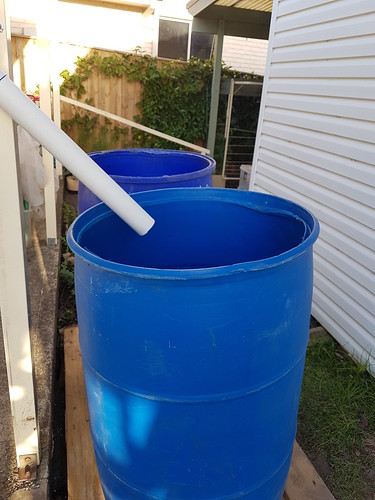
This was beautifully done! Two linked 60L barrels set on a platform with a tap installed so the water can be bucketed elsewhere, or channelled down a hose to the orchard!
Permabee 2018

3. make composting bioreactor

At first the bioreactor was difficult because nobody had seen it done before. However, after I got my laptop out and showed the taskgroup the video of the Johnson-Su bioreactor, they got the gist of it, and things proceeded pretty well.

A compost bioreactor is essentially a 'set and forget' compost that's supposed to be very rich in fungal nutrients because it doesn't get turned to aerate, thereby requiring the biota to readjust when everything is turned over. Instead of turning, six 'air columns' run through the middle of the pile, allowing the bacterial to breathe and do their thing. It takes a while to break down (some 5-6 months was the estimate) but the results are excellent, and not having to turn it means you can create several of these around the yard and deplete one while others do their thing.

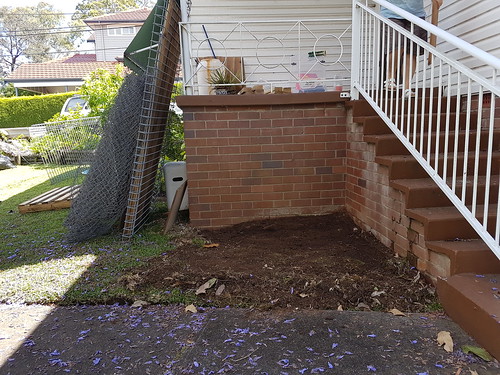
Bare space where the bioreactor is going:
Permabee 2018

They put down a wooden pallet on bricks (to keep it from rotting) and then positioned the bioreactor on top.

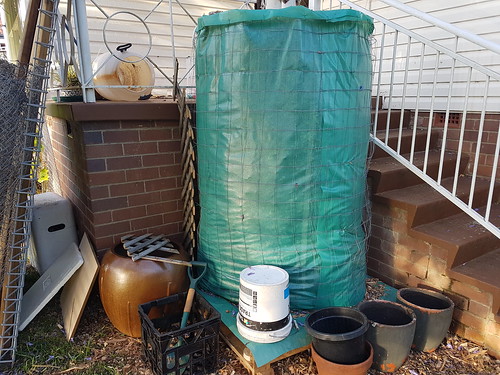
Completed but lidless bioreactor on the day:
Permabee 2018

The bioreactor contents were basically two garbage bags of horsemanure, two containers of guineapig litter, one container of chook litter, and a helluvalot of chip mulch.

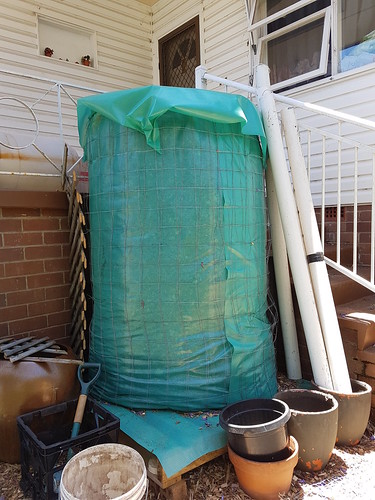
A day later, with the pipes pulled out to leave the airholes, and a 'lid' on top to keep the moisture in.
Garden December

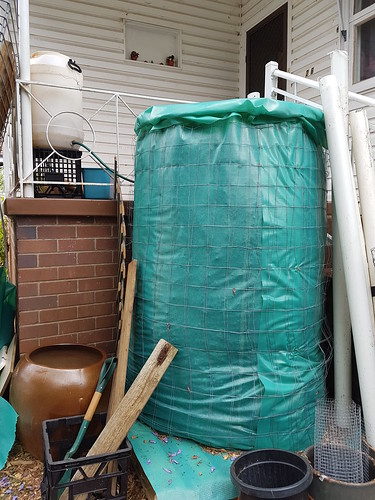
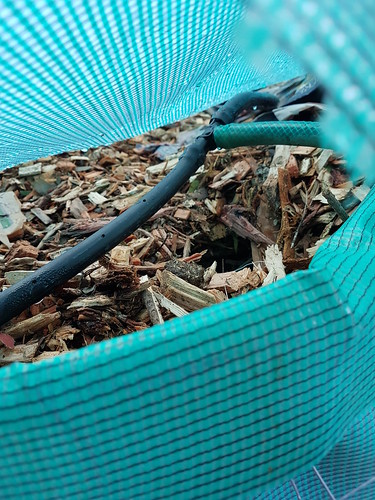
Two days later, with a water barrel that gets filled with the 'waste shower water' that fills up a bucket while showering, and which seeps into the compost to keep it moist:
Bioreactor
Bioreactor

This one, more than the other projects, will probably have pictures in future, so others can see what it looks like as it breaks down over time.

4. (move lattice and) set up composting bays

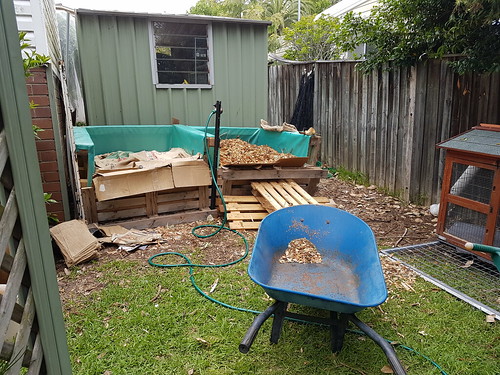
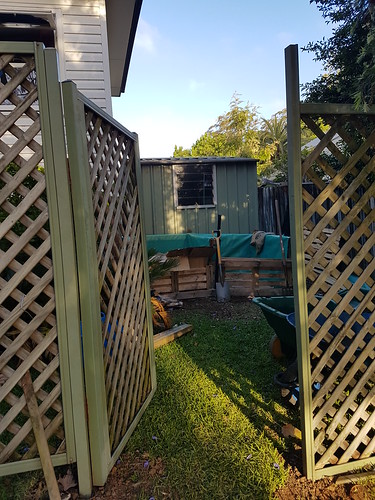
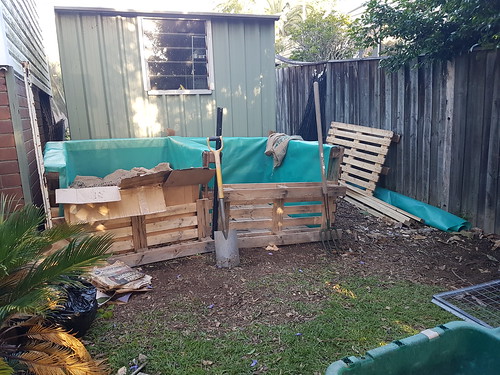
The front and back yards of the house were previously defined by the position of a lattice that ran in line with parts of the house. It left a gap behind the shed of about 1.2m, enough for a composting space, but not a very easy place to work. I wanted the lattice moved forward to run in line with another corner of the house, and a couple of compost bays set up behind the shed.

Late on Sunday afternoon:
Permabee 2018

This afternoon (Wednesday):

Composting Bays

The idea of the composting bays is to have something that regularly gets added to. Paper wastes, vegetable wastes unsuitable for the worms or chooks, possibly chook manures. It will require turning after a while, but right now, it's just settling with the compost that was made on Sunday (left-hand bay) and the pine-and-banksia woodchip mulch that I've been filling the right-hand bay with for the last couple of days. We'll see about the results - ideally, there should be more 'green'/nitrogenous wastes to make a hot compost, but the chips are only about 4 days old and might still have some decomposing to do. Either way, neither of these composts is likely to be much use for a few months at least.

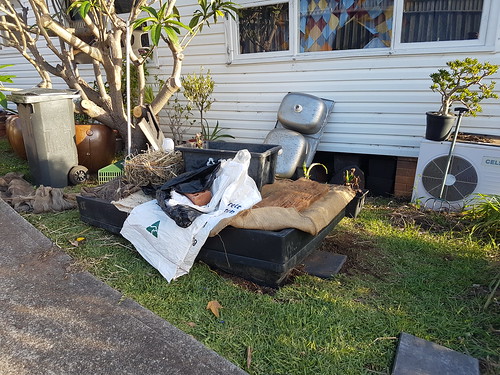
5. empty, move, and refill vegepod

This took somewhat longer than I expected; I was just expecting a move-to-a-new-location, but the wonderful women working on this task went about not only repositioning my vegepod and making sure it was flat and supported and positioned to my satisfaction, but also turned it into a wicking bed. Which I kind of wanted, but didn't figure I had the time/materials to do.

Well, they found the time and scrounged the materials, and although this meant that the task took longer than expected, it's a wonderful surprise and will be extremely useful!
Permabee 2018

Next week, I'll plant out the melons, cucumbers, tomatoes, eggplants, and mild/sweet peppers that I've been growing for the last month, and set up some wires to run up to the roofline. The goal is to get the vines growing up those wires to give a little shade to the house in the coming months of hot northerly sun...

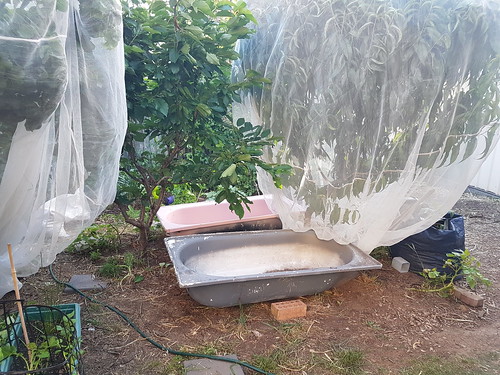
6. set up bathtub gardens

We moved the bathtubs, and that was about it. I needed to seal up the holes in the tubs, and I haven't. But they're in the location I've envisioned, now I just have to get them sealed and re-positioned, and then we can add what goes in them. One water garden, one above-ground garden - possibly a wicking bed.
Permabee 2018

Unexpected

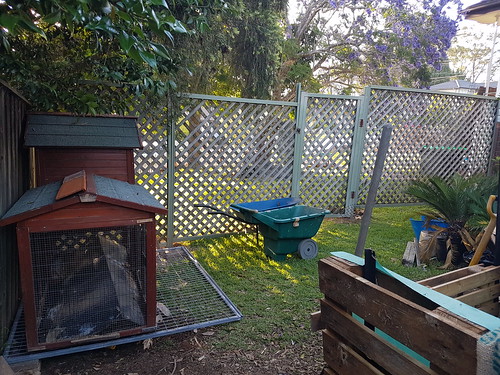
Team Chook Pen had the task of not only creating a run for the chooks, but moving two lattices (one of them blocking the area for the compost bay) and combining them into a single fence.

I put this down as a throwaway line - in brackets - a task that needed to be done in order to get around to the chook pen.

It took ALL DAY.

Out of all the tasks, this was the most time-intensive one! Taking the lattices apart, digging out the fenceposts, digging the new post holes, putting it all back together... A team of five or six started when the bee began, around 10am, and it was pretty much the very last thing to be completed around 4:30pm.

WOW!

But the result is also WOW!
Permabee 2018
Permabee 2018

Overall, that is easily several months (if not several years) worth of work done in a single day by dedicated teams of people who love gardening. The old adage "many hands make light work" precisely sums it up!

The non-existent chook pen is a bit of a pain, but I have a reasonable idea of how to go about it now, I just have to kick myself into actual gear in the next couple of weeks...

I'm thinking about applying for a permabee next year, too - this one to simply plant out a food forest along the picket fence line...

04 July, 2018

starting on the front lawn...

I've put the mulch up against the picket fence, and under the flame tree. It's not really good enough to do a proper job of composting, but we'll see what horse manure I can bring back from the rural areas I'm going to tomorrow when B, her hubs C, and their kids come to visit. We'll go up that way to check out a park and have a picnic.

For nitrogenous matter, I've realised that the local fruit shop tosses a lot of their fruit matter away into an open and openable bin, and it's not locked. If I go with enough of a trailer, then I might be able to salvage enough green wastes to make compost with. There's actually a fruit shop that's even closer, but I don't know how much green wastes they have, and I'm not sure if they'd be willing to let me take them.

I'm looking at a local nursery for fruit trees, and they have mostly dwarves, but some full-sized trees (apricot, almond, walnut, mulberries, olives, kumquats). I've been thinking about dwarves vs full-size, and thinking:

What if for every graft I planted, I made sure to plant a straight seed? (Perhaps plant in a large pot until the first flower/fruiting)
- lychees
- avocadoes (have one growing from seed even now
- apricots
- apples
- olives (should be able to buy these ungrafted)

Some thoughts on corn in the coming season.
1. Grow the coloured "glass gem" corn in front yard for grinding and gifts. Which means prepping the ground now - with chickens, but also compost heaps – hence the need for the fruit shop bin wastes.

2. Grow the regular yellow stuff in the back yard for eating. Which bed? Well, I'm inclined to think the plum-stone bed, although maybe those should be tomatoes and zucchini?  

Compost:
- woodchips (easy to get by the 8 cubic metres)
- horse manure (harder to come by - need to go up rural way)
- vegie waste (very close: local shopping centre, nightly throwout. With suitable bins/storage, could easily collect enough through the week to make a compost by Saturday.

Chickens I'm really going to struggle to keep them in greens this summer, I think. I need to find somewhere to put them that means they won't fry, and I suspect it's going to be the lower cherry-peach bed. Also, I need to plan better for when plants come out of a bed and they go onto one...

27 November, 2014

germinations

1 zucchini, 2 watermelons - although one of the watermelons has only the teeniest, tiniest solitary root. I've put it in some very rich vermicast silt to hopefully pick up some good nutrients.

Nothing else in that box appears to be germinating, and I planted the box back around the 8th-10th Nov, so it's taken the better part of three weeks to germinate. The eggplants I seeded are not germinating at all. :(

Tomorrow or Saturday will be The Turning Of Compost #2 and #3, and I think I'll dump half of Compost #2 on Compost #3, and plant Compost #2 out with...well, anything I can. At this point, probably herbs. Unless I buy some eggplants from bunnings. I'm iffy about that.

11 November, 2014

Bed 1 growing, Bed 2 composting.

The corn is growing well – I planted more in Garden Bed 1, and the lettuces/mustards are germinatingly nicely in both Bed 1 and Salad Box.

As are the cucumber and tomatoes of Salad Box:

Last

A friend recommended planting the cucumber out among the corn, so it would grow up the corn. Which I might do in a week or so.

Unfortunately, the shrooms are also sprouting happily in Bed 1, fuelled by the composting and the cool. I keep having to dig them up. And I think I have slugs there, too. Will have to look at beer/fruit traps, and getting rid of them.

I pulled up some of the weed carpet to make Compost Bed 2:

Last

Looks like it has some worm activity beneath all that, so decent drainage? We’ll see how Bed 2 (composting) does.

This one’s going to be a compost pile for the next couple of weeks, after which I plan to turn it over, rake out about quarter of it for the multi-apple that’s going on one side of it, and another quarter for the avocado that’s going on the other side, and plant it with various seedlings that will have hopefully sprouted by then.

Last

It’s too wide, though, and I think it’s losing too much heat through surface area. There’s a sliiiiight warmth in the middle this morning (admittedly, I only made it yesterday), but not enough for the kind of composting I want. So tonight is pickup night for a bunch more manures, and tomorrow will be ‘completion of the compost heap’ with another five or so layers – enough to make it about ½ a metre high and get it hot composting decently.

Last

I planted watermelon, pumpkin, zucchini, and eggplant seeds in a clear plastic box with a lid: If they sprout, I’ll plant the watermelon and pumpkin on the sides of Bed 1, and perhaps up against the fence for Bed 2.

Tomatoes, chillis, and capsicum – at least the chillis and capsicum – are next for the planting box. I should have done them last week, but let myself get distracted by the garage sale. Maybe I’ll do some carrots and onions on the ‘quiet’ side of Bed 1 as well – and put coffee grounds to deter the slugs? Must find somewhere that I can get used coffee grounds – so many cafes around here, surely they get rid of some?

The noble art of scavenging. Easier than it sounds.

08 September, 2014

starting from scratch (but, alas, not chicken-scratch)

We've had the new house for a week. I've been around nearly daily when time/schedule permits, partly to get a feel for the house, partly to air it out.

Internal renovations start today and are estimated to take at least three weeks, probably closer to a month, given delays, etc. That's okay - we're planning to move from the old house to the new on the second weekend in October, and getting as much of it done beforehand is a good start.

Two things to line up: painters, and the people to do the floors.

I'm thinking I need to start on the garden ASAP, because I've already pretty much lost spring.

I did plant two cucumbers, four asparagus, and fifteen tomatoes on the weekend - in seedling pots at the current house, but not in seedling-mix. Speaking of which, I need to get some medium river sand to mix with the vermicast.

Considering chickens: I'd still like to do chickens, but at this point the major concern is working out how to integrate them into the garden. In the meantime, I was thinking I'd do a no-dig composting garden to start with - assuming I can find the ingredients around the place: animal manure, fresh grass clippings, pea straw or lucerne.

The grass clippings are easy enough; pea straw or lucerne is harder to source in the city, apart from buying it from Monstrous Hardware Store That Shall Not Be Named. However, we are about 20mins away from a right-on-the-edge-of-urbania farming area, which might have some places that sell the ingredients for no-dig composting gardens a little more cheaply? IDK.

Something to consider is also that I'll be doing this solo. My sister isn't interested in gardening (just what comes out of it) and has physical issues. And I can't imagine any of my friends giving up their crossfit sessions for gardening. (Crossfit is cool and trendy; gardening is hard work and grubby.)

To locate/source:
- river sand (medium)
- animal manures
- fresh grass clippings
- lucerne/straw bales