28 November, 2018

Permabee

Got a permabee happening at my place on sunday - a Permaculture working bee - with my local permies group, and while I'm looking forward to it, I'm also a little worried that I won't have enough to keep everyone occupied for the entire day.
Garden Nov 2018

1. Permanent chook run
- using metal fencing in picture
- this is somewhere for the chooks to go that isn't the backyard while I'm growing things out the back in the middle of summer. I can move the chooks around the backyard in winter, but I want the space for growing things in summer
- need to work out the plan of which piece is going where and how to make it all fit together (or I could ask people to do it?)

2. connect up rainwater tanks - the main 4000L rainwater tank hasn't arrived, but we have a couple of 60L barrels that could be set up next to the carport and connected up to the downpipe there.

3. make composting bioreactor
- full resource guide
- this is an experiment in seeing if this kind of composting system could work: just set and forget until it's needed six months later (and I always need soil in my garden)
- this will be the most labour intensive one to do

4. (move lattice and) set up composting bays
- one video here
- another one here
- still another one here

5. empty, move, and refill vegepod
- can do this myself but will be easier with multiple people

6. set up bathtub gardens
- can do this myself also

On re-reading this post, I suspect I've underestimated just how long it's going to take to do some of these things. We'll be lucky to get the chook pen, the bioreactor, and the compost bays done in a day, I think!

spring into summer

It's six of one, half a dozen of the other, really.

When my garden isn't growing, then I feel I have no worthwhile photos to take. When my garden is growing, then I'm too busy in it to post here!

So the 'over-wintering' turned out to be a pretty good thing, because once spring properly came in with a burst of two weeks of rain in early October, everything has been growing and it hasn't stopped.

From this at the end of August:

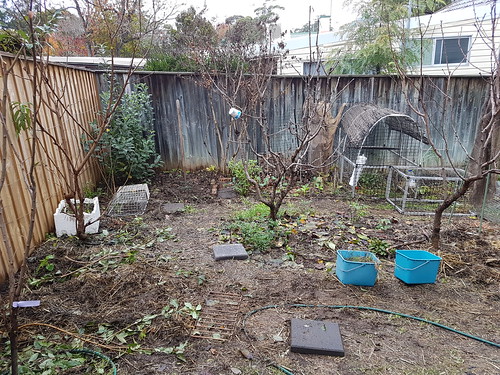
Garden winter 2018

To this in the middle of October:

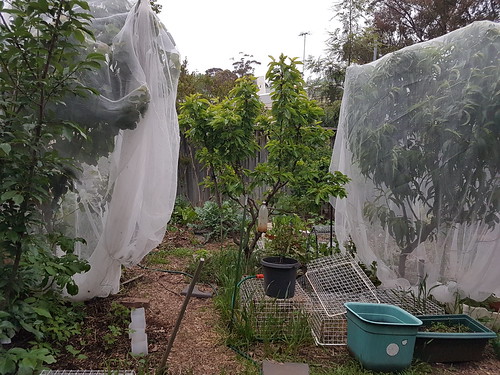
Garden winter to spring

To this at the end of November:

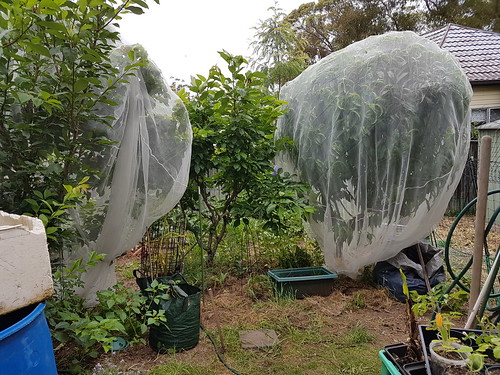
Garden winter to spring

There's a LOT of things growing in the backyard right now.

It helps that I've started to work out a system that suits me and the space in the garden, and that I've had all of October and November off work. Chances are that's going to continue into the new year, and it's going to be a little rough with nobody earning a full wage in the house. Still, we'll manage somehow. I think the garden produce is going to matter quite a bit this year.

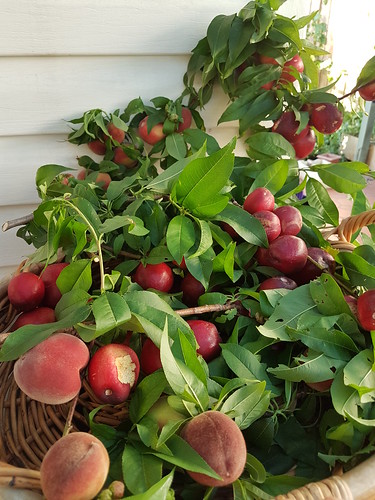
The biggest change this year has been the fruit harvest. As in BIGGEST.

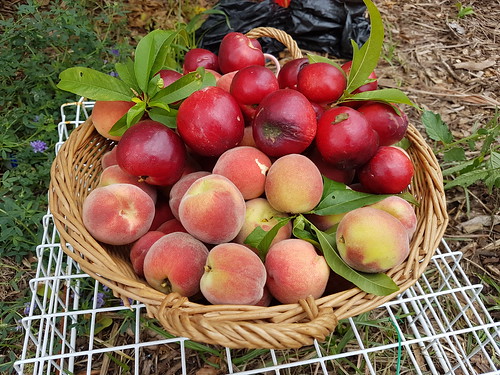
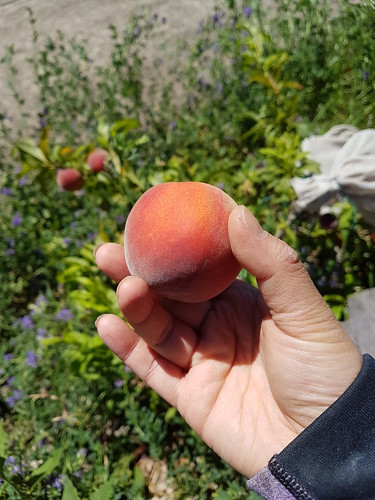
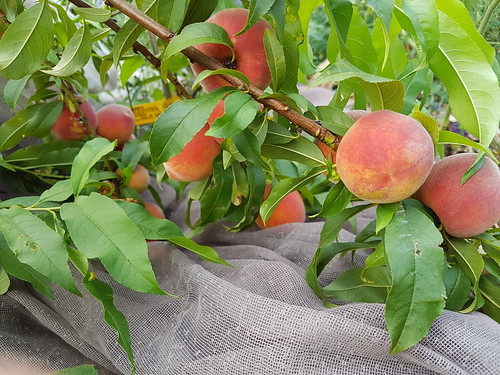
The nectarines and peaches went beserk.

Garden winter to spring

The two weeks it rained - right as the fruit was growing on the tree - probably helped, as did the chickens spending a fair chunk of the winter digging around their roots and turning over the compost that I made in the orchard bed.

Garden winter to spring

The branches got so heavy and large, that when I adjusted the fruit fly net in mid-October, I had to heavily prune some of the fruit-bearing branches to give the rest a fighting chance.

Garden winter to spring

I picked the last of the peaches yesterday and we are now drying them like there's no tomorrow. They'll go in air tight containers with little moisture-absorbent packets for eating next year (if they don't go mouldy). I'll make at least one jar of jam tomorrow, again for eating next winter.

Garden Nov 2018

It's nice to have productive garden - but yes, a lot of effort in processing and dealing with the excess. On the list of things to learn about next year: pressure canning.

14 September, 2018

bees, natural beekeeping, convenience, and humanocentricism

Read assorted articles about The Flow Hive, mostly out of curiosity. And, more recently, Australian Story, which did a segment on the guys who came up with the Flow Hive. If I may borrow something from the world of body health, the Flow Hive vs. the Langstroth Hive (traditional beekeeping) is the difference between getting gastric surgery for health reason, and just living with your bodily situation.

I mean, Gastric band surgery to adjust eating habits and improve is better than just going on as you've done, but it's not as ideal as, say, losing that weight slowly, over a matter of weeks, months, years. Surgery may be a solution, but it doesn't have to change your lifestyle, and it's best for your body if you can eat healthy and live healthy, lose that weight gradually.

In part, this is because of the difference in mindset; there's a problem - but the problem isn't obesity. Obesity is the symptom. The problem is a raft of other factors that cause obesity: factors that include environment, social and financial limitations, and genetics.

The flow hive is gastric surgery - better than a langstroth hive. But it doesn't necessarily change the mindset of that kind of beekeeping, which is people-centric. The primary consideration is the convenience of the honey harvest, not the way that bees work and humans working with bees to encourage them and - secondarily - to get a bit of honey out of it.

That's the issue that's being argued about the flow hive; that it doesn't really make life better for the bees - we're just making it easier for people. Which, yes, is fair enough if you're keeping bees for honey; although not so much of a good thing if you're subscribing to, say, permaculture or growth abundance principles, where humans maximise output by working with nature, rather than forcing nature to do things in a way that's just simpler on humans, as both Langstroth and Flow hives do.

There are also native bees and their hives, which are a different thing entirely from the European bees...

It's a thought.

31 August, 2018

out of winter and into spring

First day of (calendar) spring tomorrow!

I love how chickens can be used as weeding labour.

My mother was advising me that I had to weed the front garden bed where I have the fruit trees if I wanted to have a good orchard come spring. I hate weeding that front bed. It's full of nut grass, and things with crazy roots, and it's a losing battle for a human gardener.

Enter the chooks, stage left:
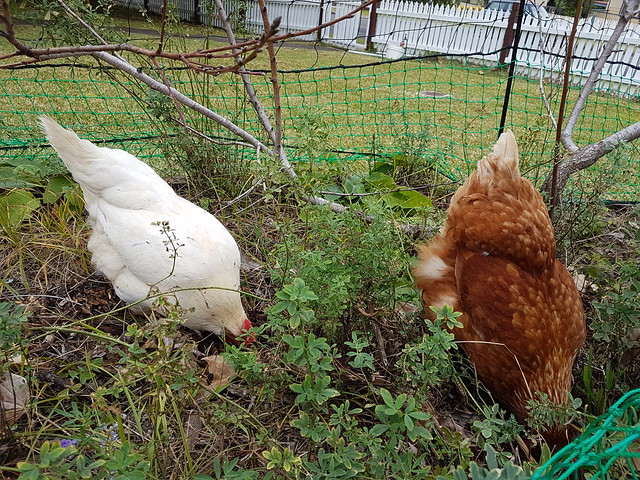
Chooks in the front.

I put up a fence around the garden bed, and would move them into the 'yard' (manually, by hand - inconvenient, but necessary since they couldn't be trusted to make their own way there) for a day's scratching and pooping, after they'd laid their eggs for the day. They loved it. Green things to peck at! Holes to dig! Mulch to disperse! HAPPY HAPPY CHOOK CHOOK!

About a month later, mum was around again.
Mum: "Oh, your front garden bed looks really good - did you weed it?"
Me: [ahahahahaha] "No, that was the chooks." After the chooks are gone, this is the garden bed:
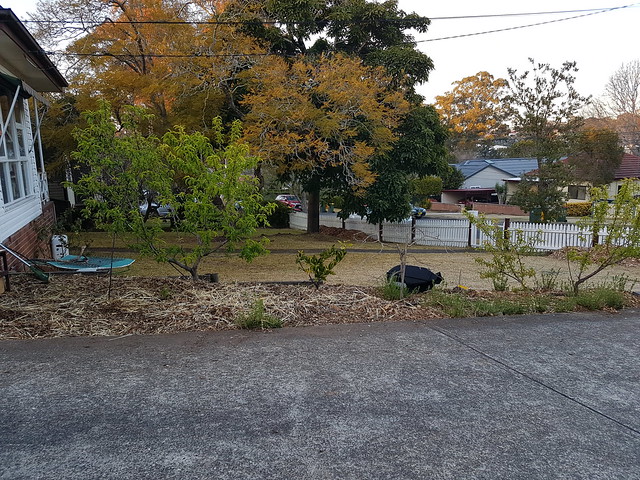
Garden end of August

Thoroughly weeded, turned over, composted (chicken poop and vegetable scraps thrown to them), and (with the addition of woodchips and oaten hay) mulched! The still-green sprouts are deep-rooted lucerne plants (nitrogen fixers), and I think I might need to sow a few more of them along the driveway edge this summer. They were excellent mulch harvest last summer, and the chooks trimmed them down during the winter, ready for the spring comeback.

So the front garden bed/orchard is fully weeded and mulched, the chooks had a lot more fun doing it, eating insects, worms, and greens besides, and we got eggs. BARGAIN.

Spring Plans 2018

The garden at the end of June:
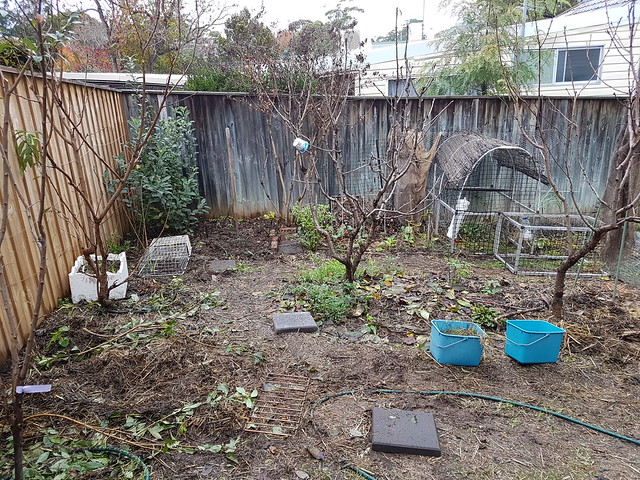
Garden winter 2018

I've decided there's no point in trying to make things grow when there's just not enough sun for them. So next year I'll move the chickens through the backyard in the autumn/winter, and sow green mulch everywhere before planting brassicas in the middle of them. I suspect that the plants I grow in the backyard in winter will need some 'shelter' - and a green mulch growing around them is more likely to provide that.

Spring Things

1. Net the fruit trees: dual stonefruit, bi stonefruit, multistone, donut peach (maybe others if we have the netting)

2. Plant out seedlings for midsummer: anything that will grow in the front bed.
zucchini plants along the front/edge
corn in the middle - both seedlings and seeds - plant with a double-handful of worm-castings and compost
pea seedlings around the apple trees (one type of pea)
pea seedlings around the fuyu (another type of pea)

3. Prep the ground for later plantings
west lounge room wall - north of rosebush for raspberry canes
west lounge room wall - south of rosebush for trombocino, melons, luffa (to grow out across the lawn, or up and over the front porch stair railing)
- make a 'border/edge' for the rosebush bed
- trim the rosebush down
- dig out the bulbs and move them?

4. Prep seedlings for later planting
tomatillos and tomatoes: repot seedlings up to the first leaves

5. Calculate what will be needed for the permabee in December
- chicken wire for tunnels, wood/aluminium framing for the edges
- wood framing for composting bays (how long, how many, need wide-and-thin panels)
- wood framing/bricks for bathtub pond (where's it going to go, make a wire frame for it, fill it with pebbles, settle the bath in it?)

6. Move parental plants (discuss with B1)
31 July, 2018

new thoughts after the weekend

Going around and seeing other people's gardens = a little depressing with how beautiful they are as well as functional, while mine is pretty much a mess... How to make it less of a mess? Well, that's pretty much the big question, isn't it?

chook stations

Disadvantage: raking out the chook mulch will become that much more difficult.

If I build rock walls for the chook station frame to rest upon, then that gives a kind of 'garden bed' space that can be filled with soil (or chook mulch), and maybe makes the garden look a bit nicer. It also will delineate the spaces for 'intensive garden beds' and 'mulch pile/perennial plants'.

Actually, now I think about it, Linda Woodrow had a space in each chook dome for perennials, right up the back and the middle, so the chooks could destroy them, and then they could grow up during the rest of the season. I don't think this will work in my garden, because the chooks are on the station for a lot longer than just two weeks, and they can do a HELLUVALOT of damage to a plant in a couple of months if the giant craters in the chook pen spaces are any indication...

Chook Tunnels

Need to fit up against the fence, between the fence and the trees. I want them bare ground so the chooks scratch away at the weeds that pop up, but they'll also need to be removeable, accessible from the top and/or the side (some kind of trapdoor, hinge/frame?), and there'll need to be points where I can put something down to keep the chooks from running away from me.

I know where I want the tunnels: running around the outside fence, but the truth is that design will be key to make this workable.

Food forest/edible hedge

Along the front boundary line (where the picket fence presently is).

Trees for food forest along front:
- Macadamias (2)
- Acerola cherry (2)
- Loquat (from seed) (2)
- Avocado (from seed)
- Avocado (graft)
- Quince (from seed)
- Chocolate Pudding tree
- Pomegranate
-

Also dig up and plant along the boundary line
- multi-citrus (2, presently in front bed)
- kaffir lime (presently in back corner)

Perhaps dig these up sooner rather than later and get into pots. I think they need richer, more fertile soil than they've been getting.

would like:
- olive
- pecan/pistachios/walnut (limited by garden space)
- kumquats

Underplanting/interplanting
- salvias
- fruit salad herb
- nettle
- raspberries
- blueberries
- holy basil
- all those other trees/plants that I've been quietly minding off to the side

Other Things - to be done at permabee
- compost bays
- bathtub garden/bathtub pond (2 bathtub ponds)
- digging out the back paths
- enclosing the front orchard with frame/netting

19 July, 2018

early sowing

I am planning to plant seeds of:
- tomatoes
- tomatillos
- eggplant
- corn
- loofah/pumpkin
- cucumber
- zucchini

These will be planted out in the front bed (north west facing) in mid-august when the ground has heated up sufficiently.
(loofah/pumpkin/cucumber to go along the south orchard edge for growing up a fence).

Some things for the permabee would be:
- An edible hedge along the front picket fence, install watering system:
o south of path: loquat, macadamias, lilly pilly
o south groundcover: cliveas, holy basil, nasturtiums, comfrey
o north of path pomegranate, kumquat, avo, acerola cherry
o north groundcover: holy basil, fruit salad plant, salvias
- A three-unit composting setup behind the shed.
- Create chicken run along outside fence
- Dig paths and fill with woodchip mulch.
- Two bathtub setups – one aquaculture, one bathtub garden (possibly on the verge?)

Plumber?
- Modify the washing machine outlet to disperse in the garden.

Builder?
- Move the lattice gate further west (line up with the house edge) (maybe ask Simon B)
- Enclose orchard garden (maybe ask Simon B)

04 July, 2018

starting on the front lawn...

I've put the mulch up against the picket fence, and under the flame tree. It's not really good enough to do a proper job of composting, but we'll see what horse manure I can bring back from the rural areas I'm going to tomorrow when B, her hubs C, and their kids come to visit. We'll go up that way to check out a park and have a picnic.

For nitrogenous matter, I've realised that the local fruit shop tosses a lot of their fruit matter away into an open and openable bin, and it's not locked. If I go with enough of a trailer, then I might be able to salvage enough green wastes to make compost with. There's actually a fruit shop that's even closer, but I don't know how much green wastes they have, and I'm not sure if they'd be willing to let me take them.

I'm looking at a local nursery for fruit trees, and they have mostly dwarves, but some full-sized trees (apricot, almond, walnut, mulberries, olives, kumquats). I've been thinking about dwarves vs full-size, and thinking:

What if for every graft I planted, I made sure to plant a straight seed? (Perhaps plant in a large pot until the first flower/fruiting)
- lychees
- avocadoes (have one growing from seed even now
- apricots
- apples
- olives (should be able to buy these ungrafted)

Some thoughts on corn in the coming season.
1. Grow the coloured "glass gem" corn in front yard for grinding and gifts. Which means prepping the ground now - with chickens, but also compost heaps – hence the need for the fruit shop bin wastes.

2. Grow the regular yellow stuff in the back yard for eating. Which bed? Well, I'm inclined to think the plum-stone bed, although maybe those should be tomatoes and zucchini?  

Compost:
- woodchips (easy to get by the 8 cubic metres)
- horse manure (harder to come by - need to go up rural way)
- vegie waste (very close: local shopping centre, nightly throwout. With suitable bins/storage, could easily collect enough through the week to make a compost by Saturday.

Chickens I'm really going to struggle to keep them in greens this summer, I think. I need to find somewhere to put them that means they won't fry, and I suspect it's going to be the lower cherry-peach bed. Also, I need to plan better for when plants come out of a bed and they go onto one...