14 April, 2020

Real Chooken Keeping - a series


0. Real Chooken Keeping
1. Somewhere To Park The Henhouse
2. Care and Feeding
3. Eggs and All That Jazz

So, in the sudden world-wide shortage of eggs you went and panic-bought chickens?

Congratulations on joining the ranks of chooken owners the world over!

Garden late December 2017

What next? Now that you've added these lovely feathered ladies to your flock, what next? Roll around (metaphorically) in all the eggs that you're going to be swimming in? Toss them a handful of food and scraps? Sunny skies and endless rooster booster?

I hate to be the bloody unhatched chick in your morning omelette, but...you've just taken on the care and life of another living creature. Like adding another member of the family, whether baby human, four-footed, or other fauna, you have taken on the responsibility for another living being. The chickens you have acquired will give you eggs, yes, but you have a responsibility to these lives that you've taken into your household and given your protection. As the adult human with brains and logic and presumably empathy, you have resources to think and consider and plan ahead as the small human and the furry pets and the feathered friends do not.

Chooks in the front.

Chicken-keeping is fun, delightful, rewarding, and enjoyable.

But it is not 'easy'. It's not as 'easy' as getting in your car, going to the supermarket or greengrocer, and pulling a dozen eggs off the supermarket shelf and coming home with them. Clean, sterile eggs, with no poop or blood smears on them. Eggs that you didn't have to fish out from under a broody hen, or in between the cracked shells of eggs that weren't hard enough to keep together when an errant hen stepped on them. From chickens who you didn't have to watch to check that they don't have any infections, worms, broken eggs in their uvula, infected scratches, calcium or vitamin deficiencies, and were getting enough good food to produce solid eggs.

Those sites that told you that chicken-keeping is easy? Well, they were half-right.

Is it easier than full-scale agricultural farming? Yes.

Easier than keeping pigs, cows, goats, geese, ducks, or any other farm animals? Yes.

Easier than backyard semi-sufficiency? Yes.

But it's not 'easy'.

If you're not already, say, an organic gardener dedicated to composting your scraps in worm farms and compost piles, with an eye to how much plastic you use, and the ups and downs of the intersection of politics and environment, then I suspect that whoever told you it was 'easy' has a definition that does not look like your version of 'easy'.

And anyone who tells you otherwise is trying to sell you something.
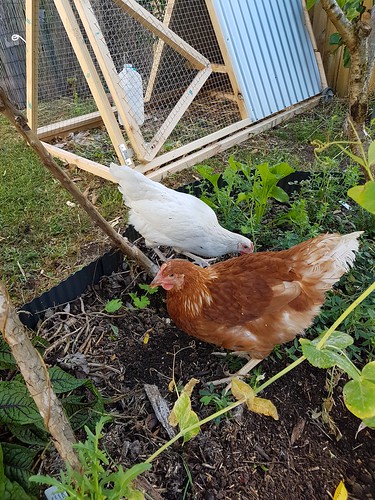
Chooks

I am not trying to sell you something. I'm thinking of all those chickens who've just been sold to suburbanites who are woefully unprepared for the newest members of their household, and are going to get a rather rude awakening in the coming months and - if they have the grit to stick it out - years.

I knew a lot more about chickens than many people seem to, and I still had a few things I wasn't prepared for.

my bonafides

I've been planning to have chickens for twenty years. Two and a half years ago, I finally had the opportunity to get two.

I bought them and their coop from Rentachook, and 'the girls' were just at point-of-lay. Since then, we've had regular eggs from the Isa Brown, and semi-regular eggs from the Leghorn. Today, they're happy, healthy girls who still regularly lay, scratch up whatever parts of my garden they can reach, eat like they've been starved since last Tuesday, and crap like it's going out of style.
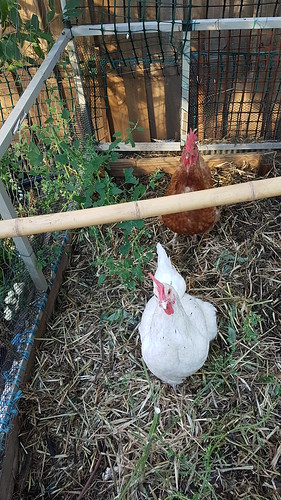
Chooken Keeping 1

The soles of my outdoor shoes are covered with chook poop. My entire garden has been rearranged to manage their input (every green thing in the garden, and every bug that lives under the roots of every green thing in the garden) and their output (did I mention the crap?). We've wormed them, dusted them for fleas, probed them for eggs broken inside the egg canal, collected blood-stained eggs with concern, muttered over rough patches on shells caused by tract infection, exclaimed over soft shells and bought hundreds of dollars worth of calcium supplements to fix the problem, poked holes in plastic drink bottles to give them toys to play with, locked broody hens out of the laying boxes, and built whole chook runs for them to scratch around in.

Has it been fun? Satisfying? Rewarding? Yes. Absolutely yes.

Do we get eggs? Yes. Sometimes. Most of the time.

Do we get more out of the chickens than we put in? *waggles hand* Questionable on an economic rationalist mentality. Fun and enjoyment don't feature into late-stage capitalism, only the satisfaction of ownership, value-added, and productivity. So maybe the care and maintenance of living creatures shouldn't be measured in economic rationalist terms: inputs vs outputs.
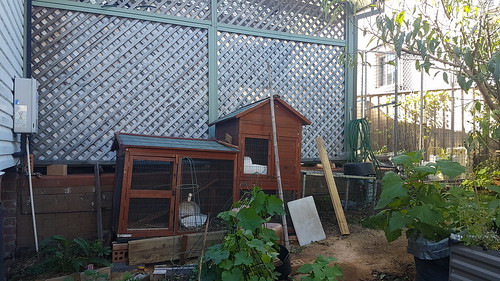
Chooken Keeping 1

What you will get out of keeping chickens is a new appreciation for agriculture and farming, a lesson in the cycles of life, an education in the complexities of nature, as well as an appreciation of exactly what it takes to produce the volume of eggs that our society consumes. (Let's not even go near the amount of chicken meat that our society consumes; that maintenance, keep, and upkeep is a whole other level of complicated.) You will get several members of the household who telegraph their every thought because they don't actually have that much brain in their head, but who will also recognise you and greet you with delight and interest (mostly because when you turn up, so does the food - Pavlov's dogs have nothing on chooks).

I'm no breeder, and I've only been doing this for a couple of years, but my chooks are happy and healthy - such that when my sister took them for checkups, the vet was very pleased with how happy and inquisitive they were. Which tells me that she probably sees a lot of chooks who aren't doing so well. Some of that is because chickens are very susceptible all kinds of infestations (worms, lice, fleas) and illnesses. And some of that is just because people got chickens for the eggs and didn't think about the rest of the bird, too.
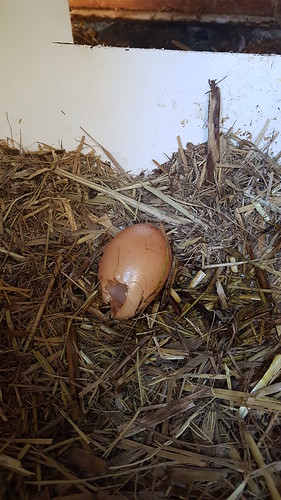
Chooken Keeping 1

Ultimately I am not here to tell you not to get chooks, or to chastise you for not thinking about your decision to get chooks. Okay, maybe I'm going to be a bit hard on you if you didn't think this 'get chickens, yay eggs' thing through.

But. BUT. BUT.

I am willing to lead you down the path of Real Chooken Keeping from someone who lives in the Sydney suburbs and has been keeping chooks for long enough to have learned a few things, but short enough that she remembers the early days of learning.

So, if you've read this far, then either you're a sucker for my writing or you're really interested in being better informed about looking after the new feathered members of your household. I'm hoping it's both, but I'll take 'wanting to be better informed'.

This series is going to be at least three posts made this week, focusing on three aspects of chicken keeping:

One. "we all need our own place to live, not just somewhere to park the henhouse"

Two. "care and feeding of your chooken"

Three. "eggs, and all that jazz"

There may be an FAQ. And an exam. (Okay, I'm kidding about the exam. Your 'exam' will be the life of your chickens; and that'll be something else you'll have to deal with.)
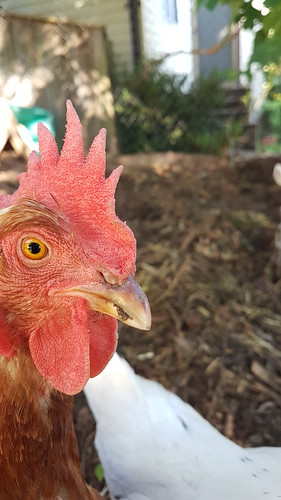
Chooken Keeping 1

If you're interested in my entries on suburban chicken keeping, then the chooks label (tag) will give you my wisdom over the last couple of years of chicken keeping, as well as how my methods have changed. That said, although the methods of keeping them have changed, my perspective hasn't; from day dot, these animals were going to be a part of our household, and I'd factored that into their keep and upkeep. And it's kind of fun to go back and see where I started and where we are now.

For those of you willing to do your own research, I'm putting in an entirely separate post on my personal chicken-keeping resources - the ones I start with when I have a question to hand.

Chooken-keeping Resource List

Jackie French's Chook Book
Yes, this is 'Diary of a Wombat' Jackie French. Her Chook Book is helpful about principles and methods for those of us who still like a good hold-in-your-hand resource to read through.

Jackie French's Backyard Self-Sufficiency
She has a whole section on 'small barnyard animals' in which chickens are briefly mentioned. But the whole book is a good introduction to planting and eating more from your own garden.

Linda Woodrow's Permaculture Kitchen Garden
The author who first made me realise that I could keep chickens in the garden and how to make the 'downsides' of chickens an 'upside' for the garden. The downside is that she focuses on the method she uses in the garden, not the principles. That said, the concept of using chickens as not just egg-layers but as mulch-makers, manure, food scrap processing, insect and pest control, and garden clean-up was revolutionary to me, and broaded my perspectives in so many ways. The book is some twenty to thirty years old, but the concepts are very relevant all the same.

Chooken Keeping 1

The Google.
Yes, you get a lot of results, but you can refine searches. I'm in suburban Australia, so I prioritise those who live in other parts of urban and suburban Australia. Good for general information about things before you get down to the specific. Also, lots of videos from people (mostly homesteaders) who have ideas about chicken coops or advice on how to integrate chickens.

Special mention to Self Sufficient Me whose video on chicken bullying I just watched as advice on how to integrate our two new chickens (the New Shanghai) with the old ones (Original Recipe).

Pinterest
Yes, it's full of pretty pictures and glorified stories of happy clappy chooks and their perfect pristine pens. But there are some gems in there, if you're willing to read up. All knowledge is worth having.

Local gardening groups.
I'm the current president of Permaculture Sydney North, and an active member of Crop Swap Sydney/ My garden was in the Virtual Sydney Edible Garden Trail this year. These are all local groups to me, and important knowledge networks - people who have done this before, or who are having the same problems, or who might have solutions to your problems that you haven't thought of yet.

Facebook Groups
There is almost certainly a group for your locality or area.

Mine are:

A small matter of courtesy
Join a local group, by all means. But please don't just barge in and ask your question. Start with a search - for Facebook there should be a search box either at the side of your screen (desktop) or along the top of your screen (mobile app). Chances are, other people have asked the question before and received many helpful answers. Read through them all, look at the arguments and think about how they do or don't apply to you. Sometimes it helps to ask a similar or related question on the same post, so whoever comes along afterwards can find all their answers in the once place.

01 April, 2020

Companion planting for winter

ASPARAGUS:

  • winter: parsley, coriander, basil, dill, comfrey.
  • spring: basil, lettuce, spinach for early crop and ground cover while ASPARAGUS is still growing
  • also: strawberries, rhubarb, horseradish

APPLES:

  • winter: garlic
  • spring: marigolds
Thoughts for front apples: marigolds Thoughts for back apples: one type of garlic

APRICOT

  • winter: garlic
  • spring: marigolds
Thoughts for back apricot: other type of garlic

BRASSICAS

  • winter: chamomile, coriander, dill, mint, rosemary and sage, carrot, chives,
  • spring: beans, spinach, cucumber

CARROTS

  • winter: brassicas, onions,
  • spring:

CHERRIES

  • winter: garlic
  • spring: marigolds

POTATOES

  • winter: coriander, beets, garlic, onions,
  • spring: corn, marigolds, peas, celery, bush beans,

PARSNIP

  • winter: green peas, rosemary and sage, lettuce,
  • spring: bush beans, peppers, tomatoes, lettuce,

  • winter:
  • spring:

31 March, 2020

Pruning Fruit Trees

The brief version of Margaret Siri's series on the ABC (circa 2010) about pruning fruit trees: Gardening Online With Margaret Siri

Apricots
Prune back to the fruiting spur
Fruiting spur is usually a trio of buds
Check for end fruiting spurs on softer branches
Prune dead material
Bring down height of tree so fruit can be reached, remove crossover branches in the middle - trim back to a fruiting spur, encourage fruiting spurs to grow thicker by having them at the end.
Spray with lime sulphur after

Peach & Nectarine
Bring the height down, trim off dead and dying
Fruiting spurs have multiple buds (2 or 3)
Trim back to a fruiting spur (check for multiple spurs)
Spray with lime sulphur after pruning (before bud swell)

Apples
Fruiting spur on an apple is pretty thin and not so clumped.
Cut just behind a growth spur, forming a short stub for the fruit to appear
Thin out shoots that are too near to the trunk, and any little pieces that have died.
Cut back to a stub, control heigh and growth, clear centre of tree, and encourage fruiting spurs to form each year rather than growth.

Japanese Plums - Blood and Golden
Try to promote new growth each year.
Small shoots are the fruiting spurs. Double and triple buds are fruiting buds.
New growth has small growth buds. To encourage growth, cut ahead of growth buds in direction to grow.
To encourage fruiting, cut behind growth buds.
Take off old wood to encourage new wood.

21 March, 2020

Planting in a time of coronavirus

PANIC! AT THE SUPERMARKET!

We've all seen the empty shelves. Mostly drygoods, but also some things run out faster than others. It kicks off something in our brains and a part of us goes into 'worry mode'. The comforts of our existence rest on a very narrow edge of 'normality' and if that 'normality' falls through, what then? How do we ensure food security?

Now, let's be honest. Very few people are going to be capable of producing as much food as they and their family need to survive. Remember the feudalist concept of peasantry? It took a peasant all day, every day, year in, year out, to provide enough food for themselves and their overlords. Granted, some of that might have been because their overlords were nasty pieces of work, but some of it was because working the soil is HARD. The curse of Adam in Genesis 3 is that Adam will work the soil and it will be labourious and difficult. And even farmers - who work off the economies of scale and the advantages of machinery, GMO, and pesticides - can tell you that working the land is no picnic today.

That doesn't mean you shouldn't grow anything. Don't be so absolutist! A little bit here and a little bit there, and you will appreciate both what it takes to put that perfect green lettuce, those round red tomatoes, those huge fragrant onions, and that big moist avocado into your salad, as well as that we have this kind of food to excess in our societies.

But where do you start?

1. start with what you already eat

If you don't eat zucchini, don't plant a dozen plants. If you hate tomatoes, don't sow tomato seeds! If you dislike kale don't think you're going to love it just because you grow it! Start with the vegies that you're already eating.

I mean, you're probably screwed if all you eat is, say, apples. You need low-chill ones in Sydney and the right microclimate can certainly help, but it's a bit more effort than you should probably start with.

2. pick the vegies that are easiest to grow

Salad greens, Asian stir-fry greens, spinaches and swiss chard and mustard leaves, sweet potato vines (mostly for the leaves with bonus tubers). All of them just need a good steady water source which you can probably give them even in hot, dry weather from the water that you use to rinse your vegies, or the warm-up water caught in a bucket from your shower, or the runoff from your roof.

We're living on the 2nd driest continent on Earth (but the 1st is Antarctica, which is honestly a category all its own) so we need to be more circumspect with water usage and wastage. And growing food requires steady watering. You need to work out where that water is coming from.

3. pick vegies that are bad value for money when you buy them in the shops

Herbs. ALL THE HERBS. Because unless you're making pesto, half the time you only want a few sprigs of it. Rosemary, coriander, basil, thyme, parsley, sage. Coriander and basil are annuals - they need re-seeding every year, but the others are pretty much perennials that will grow back and grow back and grow back. Have a permanent part of the garden that's dedicated to herbs, and then sow the annuals (lettuces, Asian greens, etc) between them.

4. Try growing 'perennials' - re-seasonal plants

Perennials are ones that keep growing back season after season. See the herbs section above - rosemary, sage, thyme, parsley. There are perennial spinaches, and some kales and lettuces can be grown perennially so long as they are kept watered. Believe it or not you can grow garlic as a perennial - just so long as you don't mind the garlic being the leafy greens rather than the white bulb (they still taste pretty much the same).

But what should I grow RIGHT NOW in March 2020 with social separation looming and a desire to build a garden?

If you're in Sydney, it's the perfect time to grow any of the following:
spring onions
lettuces, spinaches, rocket
Asian greens
swiss chard/silverbeet
radishes
peas
broad beans
brassicas (broccoli, cabbage, cauliflowers, brussel sprouts)

For spring onions to radishes, the soil doesn't have to be fantastic. Just sow in rows and keep watered - particularly the leafy greens.

For peas and broad beans, the soil doesn't have to be particularly rich, although it helps if you want a crop.

For brassicas, they're hungry beasts; not as hungry as corn, maybe, but they still like a good feeding.

But in all seriousness, just get a pot and start growing things. The sooner you start, the sooner you'll get a crop. And right now, we can all do with a crop...

15 March, 2020

Six months in Canberra

Just got word that I'll be working in Canberra for at least the next six months. (That is, if the coronavirus doesn't halt everything, including hiring.)

This presents a dilemma regarding maintenance of the garden.

With the watering system in, anything growing in the garden beds could survive well enough. But the question of what to plant through the winter is different. I'd like to grow things for spring eating, and at some point I'll have to come back and do a massive prune of the trees. April-May for the apricot and cherry, July for the stone fruits, and August for the others - but, yeah, getting the sister to eat what's growing? That's a whole other level of difficult.

So.

I'll probably sit the chickens on each bed for 6 weeks one by one to clear the bed, then plant them out with either winterveg or green manure. I suspect Green manures are going to be a big thing this winter.

Plum-Stone
Currently: tomatoes and other things, including cotton (cotton will be moved to perennial bed. Apparently they grow best on a two year cycle.)
Chooks: April
Next: chooks, then broccoli and peas, or else maybe onions or leeks.
Notes: was broad beans last year, might do green manures next. I planted a bunch of broccoli seedlings this morning, more as a "let's see how they do". I had an excess of the ones I'm gently shepherding towards maturity, so these are the rejects, and they might grow enough to provide a leafy green munch.

Apple-Crepe
Currently: corn, bush beans, eggplants, some leafy greens
Chooks: June
Next: green manures through remainder of winter, lettuces when spring comes.

Crepe-Apricot
Currently: 1 corn (with three cobs!), cucumbers, beans (for drying)
Chooks: March, right before Garden Trail for demonstration purposes. Lots of leaf litter and chook poop to make a hot compost.
Next: onions? carrots? peas? (Onions and peas don't go together) Onions and carrots would need some decently fine and loose soil. Maybe I should throw some builder's sand in there while the chooks are down to help fine it up?

Apricot-Avo
Currently: onions, leafy greens, zucchini/pumpkin, beans (for drying)
Chooks: May
Next: broccoli and peas and broad beans?

Avo-Shed
Currently: tomatillo, pumpkin, beans
Chooks: August
Next: broccoli? Lettuces? leafy greens?
Notes: this is the bed that gets the most sun through winter

Bathtub
Presently has carrots; I might try parsnips again. I could do potatoes in one of the other beds if I provide enough growing medium for it: they're slow and not very productive, but they'll keep the ground occupied.
Next: onions, leeks, parsnips, garlic

Wicking Bed
Currently: Leafy greens, tomatoes, eggplants, radishes, silverbeet
Next: onions, carrots, leeks, garlic

Vegepod
Currently: beans, loofah, curcubit, tomatoes
Next: onions, carrots, leeks

Okay, I've been mulling over this for a week. I need to post it now.

13 March, 2020