PLUM
A plum tree with two different plums on it has produced me all of one plum.
I may have been pruning it wrongly.
The types are 'Mariposa' (a Japanese plum) and 'Flavor Supreme' (a pluot hybrid, also from a Japanese plum).
Apparently Japanese plums fruit on the previous year's wood. Best pruned in summer just after the tree is harvested. Cut back all shoots by at least half, while opening up the centre of the tree by removing inward growing branches.
After seeing a seriously amazing espalier at the SEGT (I managed two gardens on Sunday after opening my garden on Saturday), I am very tempted to start espaliering my backyard trees. It would mean a few years of very limited harvests, but the results could be really good for a small backyard, rather than the crazy shrubberies that I'm having to deal with.
This requires a central framework where the most growth is at the trunk of the tree, growing upwards in a balanced fashion. Make sure the branches have lots of space so they have enough room to expand as they age.
Apple trees:tip or spur bearers (goes to FB, but short version: most heritage are spur bearers, most common backyard are tip.
Cherry trees
Mango trees
Mulberry trees
Avocado trees
Pear trees
Open centre
The open centre structure system looks like a vase, keeping the centre of the tree as clear as possible. You start by pruning a young fruit tree at its main trunk but maintaining the ones that surround it, giving more open space to the central part of the tree.
Apricot trees
Nectarine trees
Peach trees
Plum trees
Olive trees
Weekend went well, had about 50 people come through my garden, most of whom I got to chat with, some whom I didn't.
A quartet from the Central Coast, a couple from the Blue Mountains, a couple of twenty-thirtysomethings who came from 'a very long way away'... And some locals, too - at least one family from the local area who I'd spoken to the woman before about chickens on FB and we finally got to meet in person. It was good!
Some friends from childhood came to see with their daughters, and that was lovely to catch up.
Overall, I think people were most impressed by the way I managed to get so much into such a small space, and by the way I kept chickens.
And, three weeks later, I'm finally posting this. Everything's just been crazy busy and hectic.
My garden was originally designed based off Linda Woodrow's Permaculture Kitchen Garden.
In the Woodrow design, the chooks both sleep and live in the large-size tractor which is moved around the garden. They live their entire life in the tractor, and Woodrow had it reinforced against domesticated animals and wild.
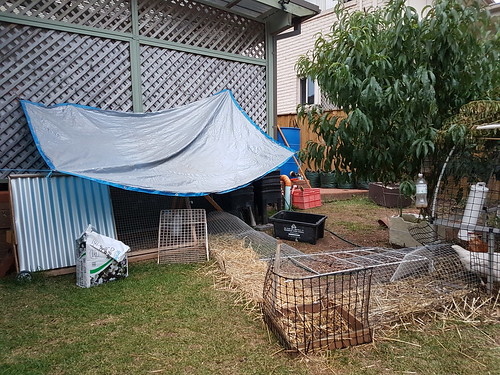
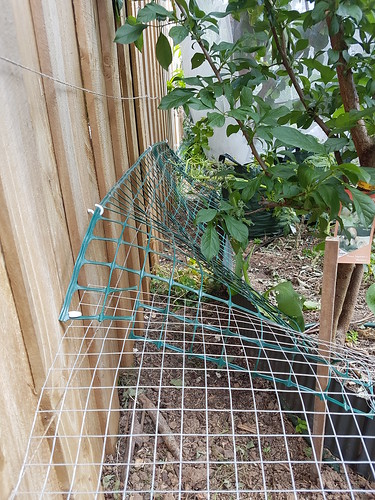
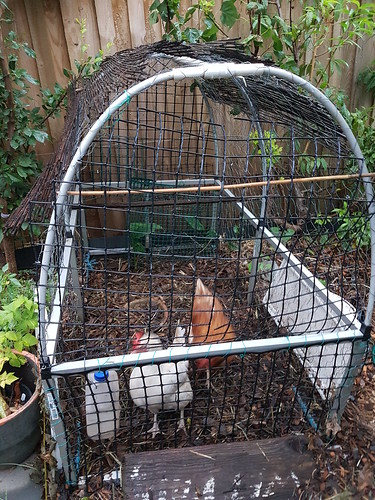
However I wasn't comfortable with the security of the tractor, and since they'd arrived in their own tractor-coop, I was reluctant to switch things around, at least to start with. So I left them in their coop, which was heavy and not very easily moveable, and which didn't make the ground very accessible at all, and set up detachable wire tunnels to get them from the night-coop to the chook tractor.
But the tunnels running across the yard were a pain to climb over. And with the tunnels, it was difficult to access all areas of the yard, particularly sections that were diagonally opposite to the coop, which required going around the cherry and donut peach trees that were planted in the middle.
A better system was needed!
At the time, I was struggling with intruding couch grass and weeds from the neighbour fence. It just kept coming up in spaces I couldn't reach easily, nearly impossible to weed.
It occurred to me: what if, instead of running the tunnels across the middle of the garden...I ran them around the edge of the garden? What if I used the chicken instinct to peck and scratch at every bit of green to keep the neighbour's weeds at bay? It would solve my problem of how to get the chooks from the coop to the tractor, as well as give them a little more area in which to hunker down and dustbathe and even shelter at the sunniest points of the day.
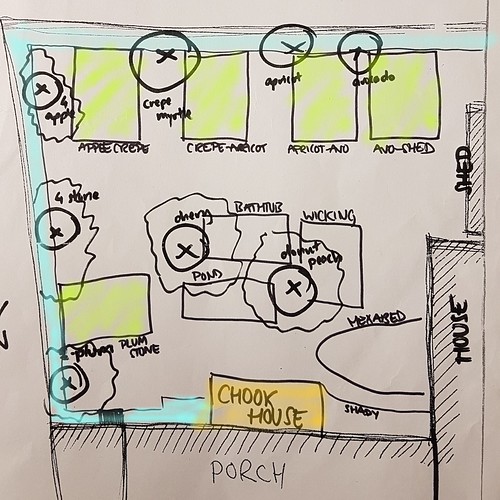
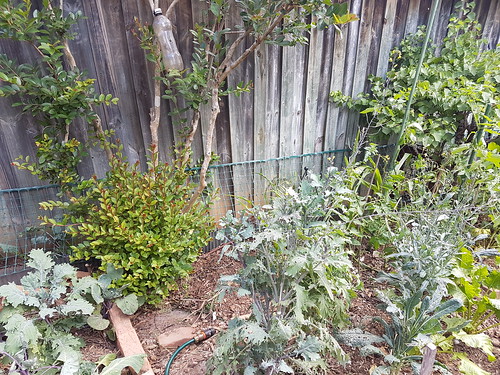
So I took the map I'd drawn of the yard, marked out the trees, and decided on where the annual beds would go. Those would be the chook tractor stations, with a path around them and sometimes in between them, and a tree on each side. Yes, the tree would take up some root zone, but we'd deal with that.
Yes, the tunnels wouldn't be very accessible, but they wouldn't need to be. I could run the chooks over the roots of the trees I'd planted around the edges of the yard, and if things got too bare in the run, I could toss straw and woodchips and leaf matter down to absorb the manure that ended up in the tunnels...
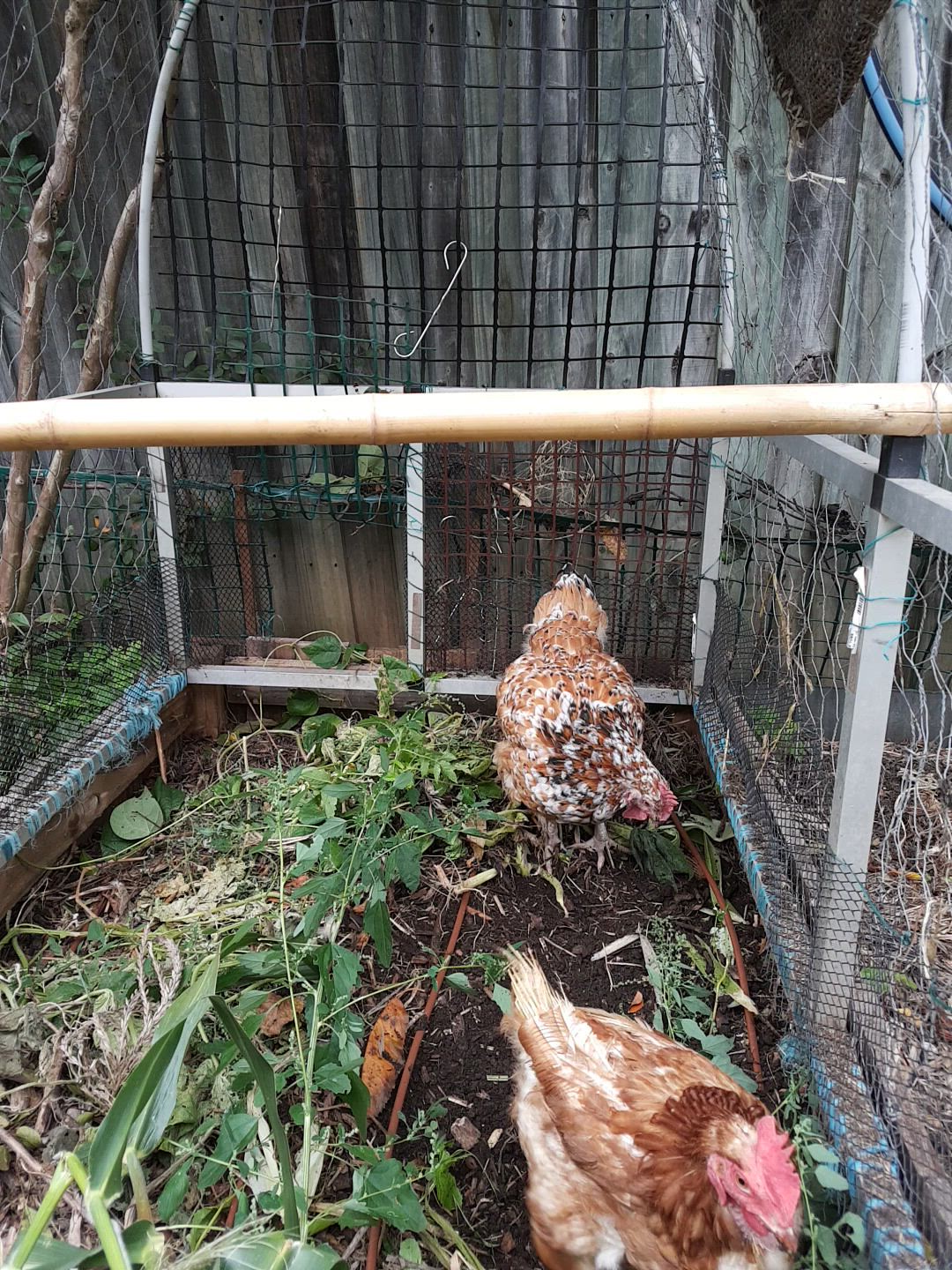
Access into the chook tractor would be from the tunnels This would also allow me to have the chook tractor over each garden bed, giving the chooks the ability to 'free range' across the garden, without rampaging through my carefully planted and tended garden beds.
There were some logistical issues - some of the trees had been planted quite close to the fenceline, which meant there wasn't much space for the tunnel. But there was enough for a chook single-file, so...we'd just have to get small chooks!
The original chicken coop was a simple, triangular tractor that was designed to be moved around the yard every couple of days. It was heavy to move and the wheels weren't great across rough terrain (or anything that wasn't smooth grass, anyway). Basically, okay for starting out, but not for the long-term.
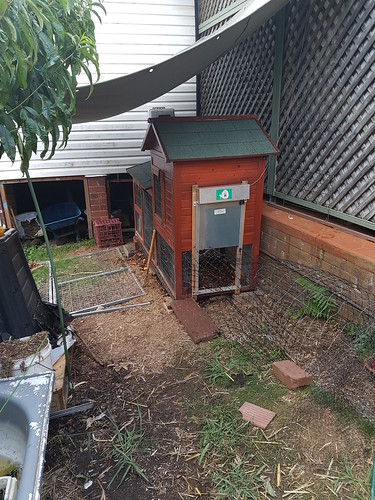
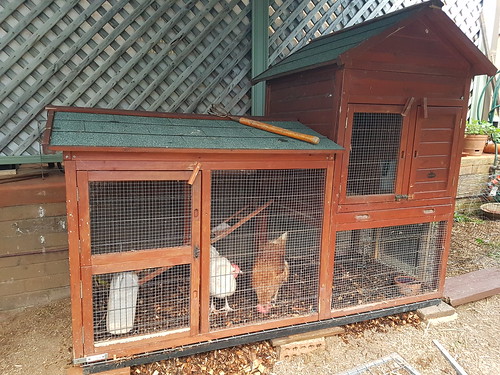
I got hold of an old guinea pig house and adjusted it for the chickens. It would do for the two to four chooks we planned to get, and the corner of the garden where the chook house was situation never gets sun anyway. Sheltered up against the wall, it would be relatively well-insulated from hard winds, even if it got pretty hot in the height of when the sun hit it early in the day and didn't leave it until mid-morning.
Ultimately, though, the idea was to run the tunnels from the coop to the tractor, wherever it was. And then I realised a small but significant issue. There wasn't really enough space to keep the chooks in the backyard all year round. Not if I wanted to grow things during the summer (at least).
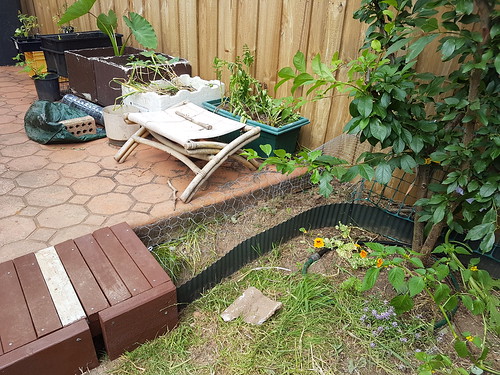
Enter the front chookyard! about 20m2 of free-range space with deep-litter for the chooks to scratch around in and generally enjoy. The tunnels could be extended all the way along the side fence and out to a section of the front yard which wasn't being used at all.
The original plans were to have the chookyard all the way up to the front boundary line, but we decided against it in the end. The first chookyard encompassed 20m2 and was built in less than a day, needing only three posts - two for the corners, one for the gatepost.
Eighteen months later, we've added another chookyard to the first, accessible via another gate, mostly for the purposes of slowly integrating new chickens in with the old flock. I wanted separate spaces to be able to allow the chooks to integrate with each other over time, without things getting too fighty.
Advantages of the tunnels includes maintaining the perimeter of the garden, the chooks being able to move themselves from one area to the next, and effective use of a space that I otherwise wouldn't use.
Disadvantages include the lack of space in the tunnels and the propensity of fights to happen in those small spaces. We've had several sets of chickens already (Original Recipe, the New Shanghai, the Banquet, and the Babies) and found that in the setting up of the pecking order, a lot of the pecking actually takes place in the tunnels where there's no room to move and nowhere to run. Not ideal, but nobody being left defeathered and bloody just yet, so it's not the worst timeline.
I've put together a video about my chicken keeping - specifically about the development of the tunnels. It's not the best video, but it's a small start to what will hopefully be a bigger series.
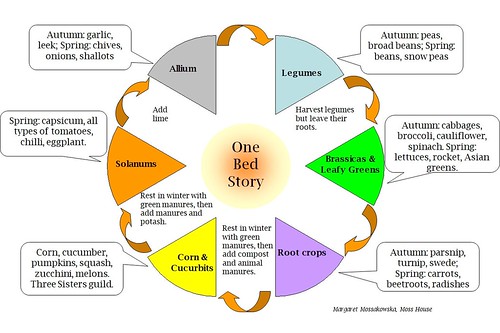
The eternal question that I raise is: how do I do this kind of bed rotation when the beds don't get enough sun through the winter, and the chickens have to be on there for at least a month, if not more?
Plum-Stone: has been manured, chooks are presently on
last: had tomatoes, beans
next: cabbages, broccoli, caulis (probably around May)
spring: lettuces, rocket, asian greens
Crepe-Apricot:
last: had eggplant, radishes, tomatoes, silverbeet
next: chooks, then broadbeans
spring: tomatoes
Apricot-Avo:
last: had corn, cucumbers, tomatoes, then I dumped a load of chook manure on it
next: tomatoes, brassicas, leafy greens (silverbeet spinach)
spring: beans, peas
Avo-Shed: still has morning sun in late March
last: fat hen, zucchini, tomatoes,
next: chooks, then green mulch
spring: corn/tomatoes
fruit tree bed: being inundated by mint!
last: corn
next: late tomatoes, cabbages,
spring: corn
lounge room bed:
last: onions, carrots, a luffa
next: put down chook poop - cabbages, caulis, brocc (best sun)
spring: roots: carrots, beets, radishes
side vegepod:
last: tomatoes, basil, rocket, silverbeet, parsley - peas
next: put down chook poop - cabbages, caulis, brocc (best sun)
spring: mustards - then tomatoes, basil, eggplants
side small vegepod:
last: eggplant,
next: needs a soil refresh: leafy greens over winter - some brassicas
spring: green mulch?
My permaculture group ran a Video Editing Course. Kind of self-taught, kind of group-encouragement.
I figured I'd start a video series about my garden. It's something to do, and if I never have a following of hundreds of thousands like those YouTubers who you see pop up in your 'recommended for you' list, it'll be fun and stretch my skills at video shooting and editing.
My first video is about the chicken tunnels in my garden, a series that I've called "Real Chooken Keeping" which will deal with the good and the bad of keeping chickens in suburbia.
And I've made one short video about my garden beds.
I have plans for short videos on 'Sun', 'Soil', and 'Water', and maybe one on composting, and striking plants from cuttings, but definitely another Real Chooken Keeping video.
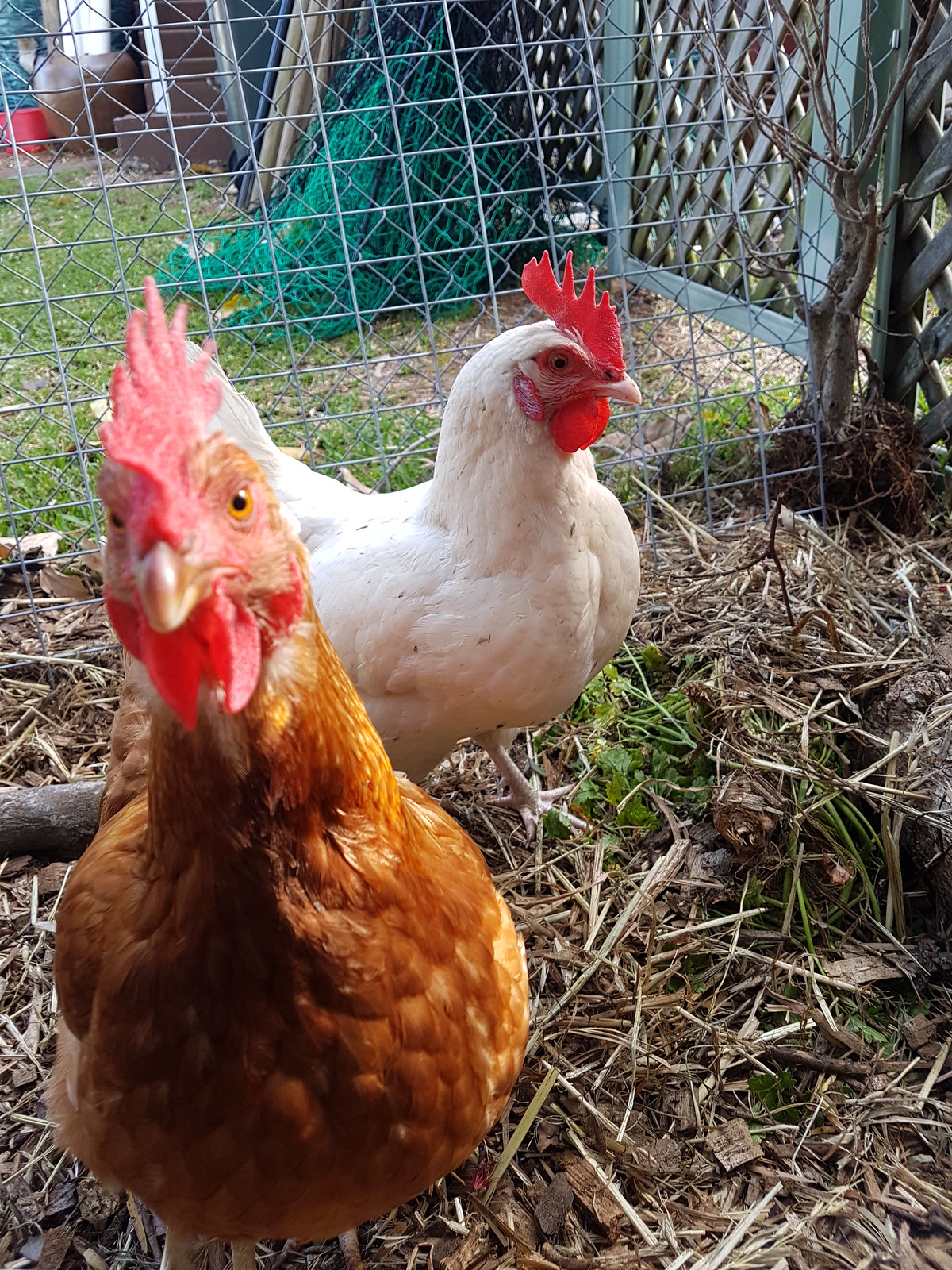
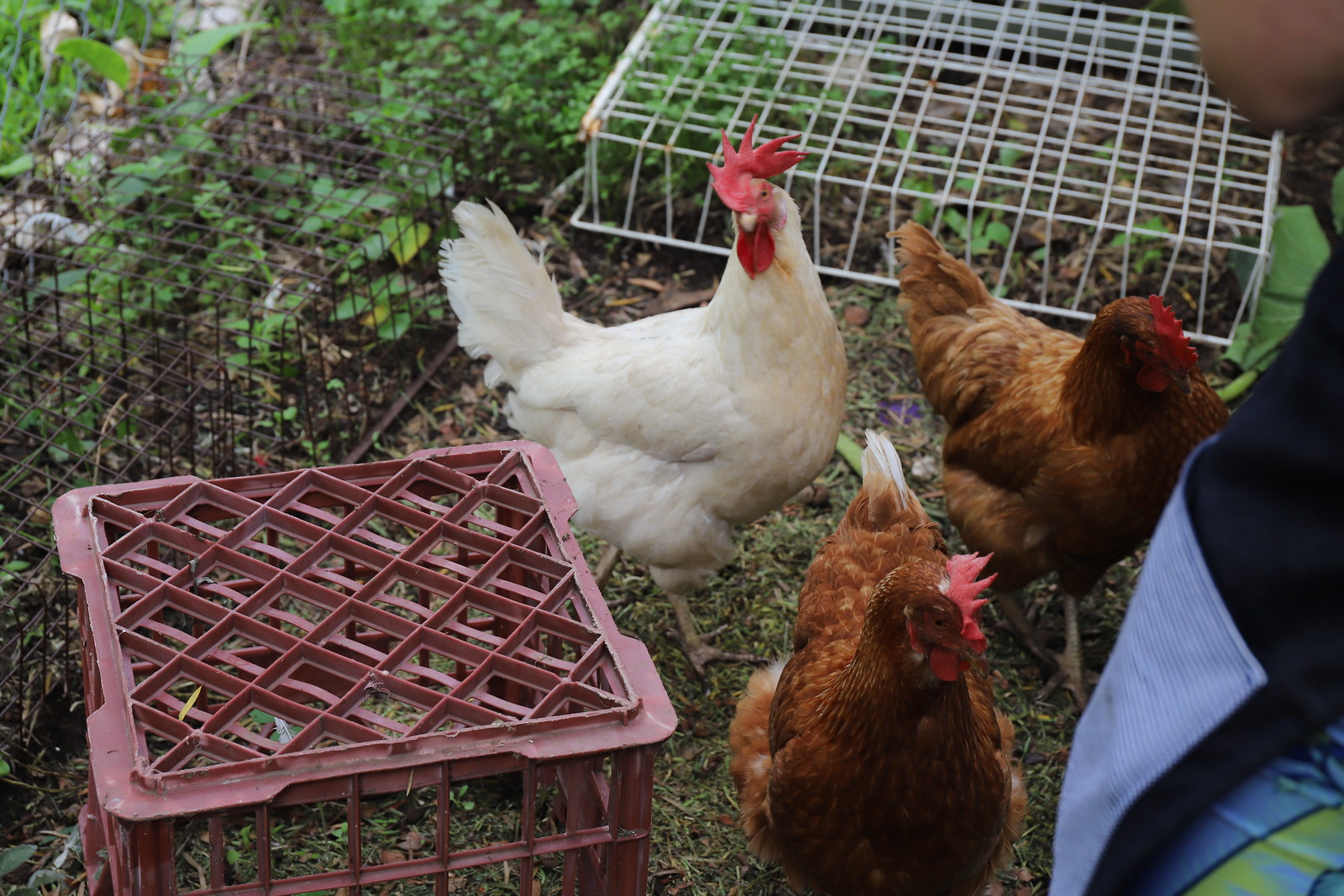
First we had Hainan and Honey - the Original Recipe.
Then we got Sussy and Tjatse - the New Shanghai.
After they died, we (more or less accidentally) acquired Shantung and Coldie - the Banquet.
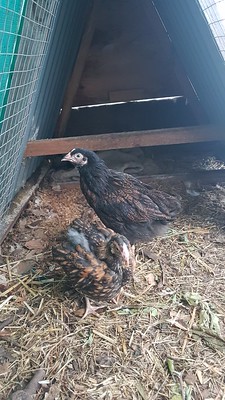
Now we have two new girls - a Barnevelder and a Wyandotte, both gold-laced. Heirloom breeds that will hopefully live long and prosper!
They're in between names right now - my sister wants to call them Si-Yow and Goong-Bao, but I personally prefer the names Coco and Chilli. So it's all a little confused right now.
Having this many chickens at once has presented an interesting question of life and death.
To some degree or another, I've had 'succession planning' in mind ever since we got the Original Recipe: they were layers whose breeding is basically to lay as many eggs as possible until they collapse from the laying and pretty much die. In industrial farming, Hainan and Honey's breeds - a Leghorn and an ISA Brown - would lay heavily for 18 months and then they'd be either killed off or farmed out, to be replaced by younger models. I knew this fairly early on, and always planned to slowly increase the brood.
What with one thing and another, we only started adding to our flock last year, and then all of a sudden we had chickens right left and centre! It's been pretty busy around here, bringing in the new chickens and acclimatising them not only to each other but to the setup of the garden.
However, both Hainan and Honey have had issues with their reproductive tract in the last six months, requiring a visit to the vet and medical decisions regarding their care. Now both of them have a hormone implant that keeps them from laying, and Honey may very well need surgical intervention.
Which brings us to a question that most urbanites don't actually ask themselves: Are these backyard chickens pets or are they productive farm animals?
How much are we willing to pay to keep them alive, even after their egg-laying days are done? Are we willing to put them down when their time is over, and if so, when is their time over?
And that leads into a question that is even more fraught: What are the end-of-life options for your backyard chickens?
I'm fairly sure I could kill a chicken if I had to. It's not the death that bothers me, or even the taking of it. An animal deserves a swift and as-painless-as-possible death, whatever the purpose of that death - whether simply to put them out of pain or to put them in the pot. The part that worries me a little is possible emotional connection with chickens that I've grown attached to, and the prospect of screwing it up, or of making a mess.
I don't expect everyone to think the same way, either. My own attitude is that they're partly pets and partly farm animals. I'd like to keep them alive with a good quality of life as long as possible, but I'm not entirely comfortable with - say, medical intervention to the degree of surgery. And, to be honest, there's a personal component to it. Both Hainan and Honey are our first birds, we've spent time with them, cuddled them, they have wonderful personalities that I've gotten to know in the last three and a half years that we've had them. The next couple - Coldie and Shantung - I am less personally invested in. Chances are, once they reach failing age - that is, once they start getting sick beyond basic care, we may simply say "such is life" and end their days.
I don't think the killing of animals is morally wrong, by the way. I am an omnivore, and acknowledge that many things die to provide the protein which I am fond of eating. Do I have issues with commercial animal production and slaughter? Yes. But also, humans as a race have been bringing up animals for slaughter and food since Day Dot, and so long as the care of the animals in life is good and their death is swift and not for pleasure or pride (eg. trophy hunting), everything lives and dies. *insert The Circle Of Life song*
But, yes. The questions regarding the responsible way to deal with the end of a productive animal's life rears its head. I have some answers to those questions, and I will live with them, but they're not comfortable - not for an urbanite like me. That doesn't mean I get to ignore them.